A Blessed Composer: Àngel Rodamilans (1874-1936)
October 20, 2013

When, last Sunday, the Catalan Benedictine Àngel Rodamilans was beatified, it occurred to me to wonder how many (or how few) composers have been honored in that way. The only one I can think of is Hildegard of Bingen. Given the importance that official church documents place on music in the life of the church, we might expect a little more musical presence among the blessed. (There are plenty of saints who made music — like Robert Bellarmine, who played violin and not forgetting the legendary figure of Cecilia, who may or may not have been a musician.)
Twenty-five years ago I heard about Rodamilans and his very cruel martyrdom from two of his pupils (Ireneu Segarra and Gregori Estrada, now deceased), and they gave me an album of his works. Here’s a sample of his style:
A Musician at His Post
May 21, 2013

On my last Sunday serving in St. Paul’s Chapel of Columbia University May 5, 2013, a singer in the choir snapped this photo. I’ll always value my time there (my first liturgy there having been when I was 25 years old, with the Woodstock Jesuits).
Architectural Crime
April 6, 2013
Contrary to common belief, not every architectural decision in Barcelona is infallible.
This fun moderniste building:

became this:

(And keep in mind, as you look at them, that the black-and-white photo if of a very colorful building, while the color photo is of … well, you can see for yourself.)
Hat-tip to Liz Castro
Marie-Claire Alain
March 7, 2013

Last week the music world lost one of its great lights. There can hardly be an organist alive who has not been influenced by the work of Marie-Claire Alain — and by her rare personality.
I first encountered her directly when she stopped into an organ lesson that I was having with Paul Jenkins when I was a young student. She was to play a recital that evening on the instrument that I was having the lesson on and was having doubts that she wanted to play the Trois danses, by her brother Jehan, which were printed on the program. Mr. Jenkins suggested that she try some other Alain works on the instrument right then and there. By the time they finished, I had heard his sister and chief exponent play almost all the fairly slender catalogue of Jehan Alain. I suspected that my teacher had caused her to do that for my benefit, and I’ve never forgotten it.
About that same time, I was seated next to her at a rather ceremonious luncheon. This was soon after she had first recorded the complete organ works of Bach. Young and eager to say right things — or, at the very least, no very wrong ones — I congratulated her on the great accomplishment; whereupon she told me that plans were already underway for a second traversal of those works in future years. I remarked that it would be interesting to us all to see how her second take on that corpus would differ from her first. She looked moderately horrified at my faux pas: it seemed that it would be only for the sake of advancing technology that she would re-record, not for any development in her conception of the works! (This, however, was perhaps not quite consistent with her embarrassment at my letting her know that I knew a much earlier recording of some Bach works that she had done and about which she professed great embarrassment. They were not at all in her later style, but springing much more from her studies under Marcel Dupré.)
The next time I encountered her outside performance came years later when she was in New York on her way to play a concert in Yale’s Woolsey Hall. I was deputed by the powers at the Yale Music School (specifically, Charles Krigbaum) to show her around the Metropolitan Museum of Art. There was a major show of paintings of Georges Seurat that she was eager to see. Little did I expect that one of the privileges of seeing them with her would include — besides the anticipated familiarity with scenes — exclamations like “Oh, that man was a great friend of my father” or “My aunt used to have tea with that lady weekly.”
After we finished with Seurat, I took her to see the 18th-century Appleton organ in the hall where the armor is kept. After she had played it for a while, I said “This American instrument is of course quite different from your organs back home” (thinking of the boldness of what we call French-Classical tonal characteristics — not to mention the symphonic developments of the 19th century). “Not at all,” she replied, “You can find many instruments like this in French villages. They’re just not the sort of thing you Americans go to visit.” (A pattern was being confirmed of my always saying more or less foolish things to her; but I have to say that her manner minimized any embarrassment that I might otherwise have felt. And, besides, I was always learning something from her.)
Most of all, many of us will always value the role that she played in bringing the vitality of 17th- and 18th-century French organ repertory into our lives, as well as the many unforgettable performances of what surely must have been her trademark in the estimation of audiences around the world:
Quoth Robert Schumann
February 20, 2013
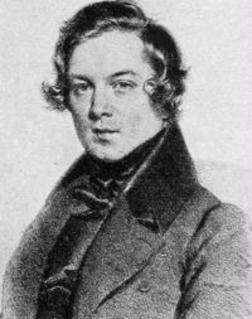
Maxims and House Rules for Young Musicians:
– A lot can be learned from singers, but do not believe everything they tell you.
– You should play scales and other finger exercises diligently. There are, however, many who think they can achieve everything by spending many hours a day practicing mechanically right into old age. That is just like trying to say the ABC as quickly as possible, getting quicker and quicker, every day. Make better use of your time.
– Play in time! Some virtuosos’ playing sounds like a drunk walking. Do not use this as your example.
– Do not be afraid of words like: theory, thoroughbass, counterpoint etc. They will treat you kindly if you do likewise.
– Try to learn to play easy pieces well and beautifully; it is better than a mediocre performance of a difficult piece.
– You should always play on a tuned instrument.
– Even if you have a weak voice, try to sing at sight without the help of the instrument; by doing this, the sharpness of your hearing will improve continually. If you have a melodious voice, waste no opportunity to have it trained, and treat it as the finest gift heaven can bestow on you!
– When you are playing, do not concern yourself with whoever may be listening.
– When you are older, do not play fashionable pieces. Time is precious. You would need a hundred lifetimes just to get to know all the good pieces there are.
– You must not promote bad compositions; on the contrary, you should expend every effort to help suppress them.
– Do not search just for technique and so-called bravura. In a composition seek to bring out the expression that the composer had in mind, and no more. Anything beyond that is a caricature.
– Waste no opportunity to make music with other musicians, in duos, trios etc. This makes you play fluently and with animation. Also, accompany singers often.
– If everybody insisted on playing first violin, there would be no orchestras. Respect every musician in his own field.
– When you get older, occupy yourself more with scores than with virtuosos.
– Among your friends, seek out those who know more than you.
– As a respite from your musical studies, read a lot of poetry. Take lots of walks in the fresh air.
– And how does one become musical? Dear child, the most important things – a good ear and quick perception – like all such things, are sent from above. But your given abilities can be developed and enhanced. You will not do this by shutting yourself up like a hermit and working for days on end on mechanical studies; rather you will do so by taking part in a variety of live musical activities, especially those involving choirs and orchestras.
– Never miss an opportunity to hear good opera!
– Hold the old in high esteem, yet also warmly embrace the new. Hold no prejudice against names unknown to you.
– Do not judge a composition on a single hearing; the things that first catch your attention are not always the best. The great masters must be studied. Many things will only become clear to you in later life.
– When judging compositions, distinguish between those which are true works of art and those written to please dabblers. Stand up for the former, but do not be angered by the latter!
– The road to improve is always through hard work and perseverance.
– The purpose of Art is not to acquire wealth. Just strive always to be a better and better artist; everything else will follow of its own accord.
– There is no end to learning.
For a more complete version of this list, see here.
Is It Insane These Days to Go Into Music?
February 7, 2013
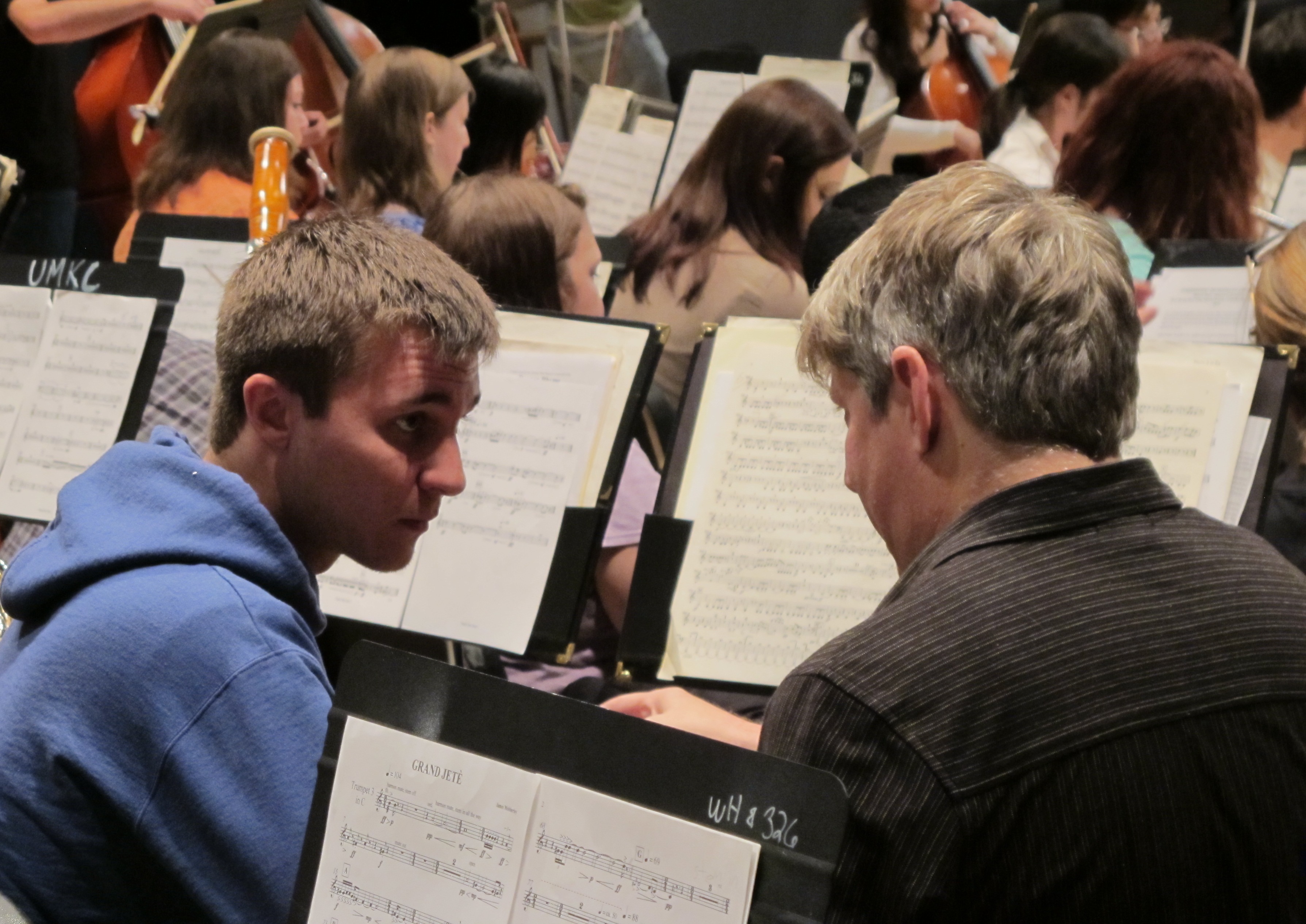
In periods of high unemployment and economic recession, many parents panic when the child gets serious about a career in music. Who’s right? The kid with a passion or the cautious parent? A non-crazy woman in Denver makes her case.
Victoria of the Angels
January 15, 2013

Today is the eighth anniversary of the death of the great Victoria de los Angeles.
In memoriam aeternam.
Rejoyce!
January 4, 2013
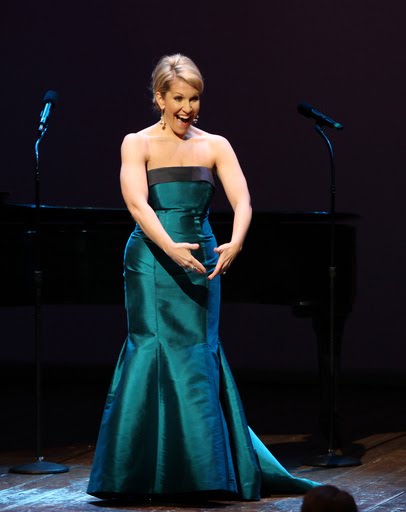
A select few performers have learned (or knew instinctively) how to use social media to enhance communication with the public. None more so than the phenomenal mezzo-soprano Joyce DiDonato. An hour ago a woman tweeted:
Bess Moser @moserbess
Tonight I will be seeing my first performance @MetOpera. Tonight I will be seeing @JoyceDiDonato onstage for the first time. #bestillmyheart
Because of the hashtag, the singer saw it and tweeted back
Joyce DiDonato
@JoyceDiDonato
Tonight I will be singing live for @moserbess for the first time! 😉
This is brilliant — and legitimate. After all, Bess Moser is presumably paying a substantial amount of money to hear an artist who is being paid a really substantial amount thanks to the public. And the obligation of performer to audience is even greater in non-tangible terms. But few so clearly recognize it as does Joyce DiDonato.
 RogerEvansOnline.com