Alive and Well
November 20, 2009
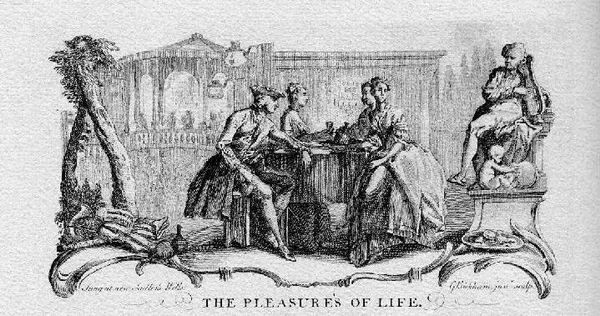
Handel statue in the Vauxhall Gardens
We have been in an encouraging period for the lyric art in New York lately. While the Met is basking in the signal success of the twin debuts of Patrice Chereau and Esa-Pekka Salonen (a production to be commented on here only after I’ve seen it a second time), a revivified New York City Opera is knockin’ ’em dead next door, and the Juilliard Opera has, in my book, made history as well.
First, a bit about the latter. Opening night of the Juilliard production of Handel’s Ariodante, while excellent in itself (surely the best music-school operatic production I’ve ever seen and heard), was also redolent with wider significance for our musical life. While no students of singing who hope for an ecclectic career can be expected to dedicate themselves completely to the way we might think Handel’s singers sang in their smaller theaters and amidst different audience expectations, the singing was on such a generally stylish level as I had long ago stopped hoping for in such circumstances. And, twenty years ago, the idea of a Juilliard orchestra playing Handel with the devoted attention and verve we heard would have been laughable. It was easy to forget that modern instruments were involved. We saw a production in modern dress and with modern manners that somehow managed to partner with the spirit of an entertainment devised for audiences long since safely stowed in the churchyard, on a subject even more antique. It was impossible not to reflect on how improbable this success (and perhaps even the programming of this opera) might have been but for the popular successes of Handel works across the plaza at the City Opera — the best of which issued from the same director as this triumph, Stephen Wadsworth.
Going across that increasingly spiffy plaza next night for the City Opera’s Don Giovanni, the first new production of its phoenix-like fall season, and the first under a much-discussed new régime, was to encounter the same conductor as at Juilliard. (One hopes it was widely noticed and appreciated that Gary Thor Wedow conducted Handel on Wednesday, Friday, and Sunday and Mozart on Thursday and Saturday — Levine-like exertions.) And the results were surpassingly fine in the performances I heard. Both orchestras played with accuracy and liveliness. Christopher Alden, who is not an unknown quantity in general, revealed a genius for innovative staging and faithfulness to aspects of score and libretto that we rarely have seen. This ultra-modern production showed that conceptions that make explicit, in modern terms, emotions and motives inherent in the libretto (including, but not exclusively, human sexuality) can be done gracefully and entertainingly. It also gives the lie to the idea, much spun after the Met’s new Tosca opening, that New York audiences are stuck in the mud of mindless traditionalism. They surely seemed to like this far more intelligent venture, which is also arguably a far more venturesome one.
The next night was my first visit to their revival of Esther. I had seen the premiere in 1993 but really didn’t know what to expect after all this time. I remember that, on that earlier occasion, I was sitting two rows in front of the composer, who had led a doctoral seminar in 19th-century opera that I had taken. Weisgall was a great favorite of mine as a personality (irascible but fair) and an intelligence (encyclopedic in its knowledge of vocal and dramatic values). He also told memorable stories about past events and colleagues. What I was unprepared for after all this time was the sheer beauty of the music. Supported by a sturdy libretto marred by a minimum, considering everything, of propaganda aimed at modern conditions, I found the performance exhilarating beyond my dreams. Others I know felt the same way, while others expressed only modified rapture. The presentation of this work, difficult for some, expresses, in large letters that the community can clearly read, the seriousness of purpose of City Opera’s new intendancy and its interest in enriching us over the long term without undue regard for instant popularity. Not that I subscribe to the take-your-medicine-it’s-good-for-you school of programming; as I’ve already said, I found this modern work musically elegant, dramatically persuasive, and … entertaining.
And let’s not forget to commend them for the technical command and artistic focus to take such a difficult piece and make it sound easy.
Two other issues command attention with regard to our current experience of the New York City Opera:
(1) Where are all those people who so loudly shouted, both in certain corporate media and in endless anonymous tirades on blogs, that the NYCO was moribund, if not already dead through well-deserved indigence? They sneered at the engagement of Alden for standard repertory and at the immediate presentation of a “too-modern” work, they ridiculed the retention of musical staff, they proclaimed the impossibility of maintaing ensemble morale — or even the fending off of ruinous strikes by unions. But what do we see now? Not only are fund-raising efforts healthy (the opening night alone bringing in $2.3 million) and ticket sales brisk, but raw observation would indicate that the halls are alive with the sound of the clanging of the till at bar and gift shop. What looks like unusually cheerful audiences disport themselves in the generous public spaces so lacking at our noble Carnegie and Metropolitan piles — and this not only during such genial departures as Jewish Singles Night (for a performance of Esther, fittingly enough).
(2) The acoustical properties of the theater: Bearing in mind that there is much work still projected (with only a few months since the arrival of the new General Manager and the application of a newly-engaged acoustical firm with different ideas than had been governing reconstruction up to then), it’s still unavoidable to reflect on what has been accomplished so far. Apart from the Opening Gala, the two performances noted above are my only experiences of the latest renovations. The gala accomplished what it needed to accomplish: it was an enormously festive evening that showed some of the jewels in the NYCO’s crown. Not least among these are the chorus and orchestra that we were so often told would disintegrate, but which instead show an esprit that not only seems quite new but is rare in any opera house. Naturally, we must look to actual operas to judge the most crucial qualities of the performance spaces (for a stage, pit, and various parts of a house can be all-too-radically different spaces acoustically). I can report that the Mozart, heard from the first row of the First Ring, was appealingly present and almost consistently in appropriate balance with the orchestra, which is of course not entirely a function of room acoustics. The stage set, very intelligently, seemed designed to project the sound toward the paying customers, and I was very impressed with what I heard all round.
For the Esther in row H of the Orchestra, I naturally felt even closer to it all. This can be a negative if being closer to the orchestra makes it overpower the singers. This was not the case with what I heard, even with a set that was not as acoustically indulgent as that of the night before.
Add to this my first impression on walking into the room on Opening Night, confirmed by others who told me they felt similarly, that the rearranged room feels almost intimate compared with its former configuration. I’d never have believed that quite moderate changes in seating could have made such a difference.
Now, it probably needn’t be said that these are subjective and situational judgments. But then all estimates of acoustical phenomena depend on various personal physiological and psychological factors. It is, for example, beyond me how the very honest Allan Kozinn, in the pages of The New York Times, can pursue what begins to seem a vendetta against the acoustics of the revised Alice Tully Hall. Just last night, at the recital debut of the ravishing young soprano Susanna Phillips, a marvelous voice rang out thrillingly. (I was in row S but have heard all kinds of music in many areas of the hall since it reopened.) To my ears the Tully room has, very noticeably, more reverberation than before, and a pleasing “ping” that I certainly don’t remember from the old days. So we shouldn’t be surprised if reactions will vary in the newly re-christened David H. Koch Theater, as well.
So there we are. One man’s response to what have been highly pleasing, even exciting, communal events of music lately. Feel free to contest or supplement those reactions with accounts of your own experience.
From Wax Cylinders to CDs and MP3s
November 11, 2009

So pronounced has been the response (in clicks and private e-mails; my readers seem to be shy about public comments) to the wax-cylinder recording of Robert White, that I thought I should correct any possible misimpression that his father’s repertory is the whole of his work as a performer — or even necessarily central to it.
How’s this for variety?
Hayden Wood: “A Brown Bird Singing,” with Stephen Hough, pianist
G.F. Handel: “While Kedron’s Brook,” with Ivor Bolton and the London Baroque Soloists
Irving Berlin: “Let Me Sing and I’m Happy,” with Dick Hyman, piano
Irving Berlin: “Cheek to Cheek,” with Marilyn Horne, mezzo-soprano and Dick Hyman, piano
Francis Poulenc: “Fancy,” with Samuel Sanders, piano
And, just to show why he was a child star, here he is with Fred Allen and Shirley Booth on live radio, in 1948:
Thomas P. Westendorf: “I’ll Take You Home Again, Kathleen”
Not that he ever leaves behind his basic vocal orientation. After all, John McCormick had already sufficiently demonstrated the usefulness and versatility of the Irish-tenor approach to performance. And the possible variety is certainly manifest in this small sampling of Robert White’s vast discography. Not represented here is, for example, his work with the pioneering Noah Greenberg in medieval drama, or his recent recordings with Joan Morris and William Bolcom.
We Live in a New Musical World
November 4, 2009
YouTube has been an outlet into new worlds for many of us, including me, my friends and colleagues, who never dreamed that we’d have access to so many performances that were once the province of the well-connected few.
Here I note that even the notations to the right side of these postings (if you click back to the YouTube sources) can be of major musical news: musicology now comes in previously unexpected guises. Actually, this once I’ll quote the valuable (anonymous) commentary to the right — thus illustrating the value of democratizing media:
In March of 1928, Fred Gaisberg the famous artistic director of the Gramophone Company (HMV) persuaded Rubinstein to make a few test recordings. None would be released without the pianist’s permission. Those that did not have Rubinstein’s approval would be destroyed. Rubinstein had serious misgivings about recording because he had heard piano recordings that were made using the acoustic process which he said made the piano sound like a banjo. (Perhaps Rubinstein was speaking from personal experience. Circa 1910, he had recorded two selections for the Polish label Farorit. This recording is extremely rare and has never been reissued. There is a tape). Gaisberg told him that the new electrical system captured the piano tone faithfully. Upon arriving at the studio, Rubinstein was disturbed to find that one of the pianos that he was to play, a Bluthner, was not a full size concert grand.. Gaisberg encouraged him to try it. Rubinstein writes, “Well, this Bluthner had the most beautiful singing tone I have ever found. I became quite enthusiastic and decided to play my beloved Barcarolle of Chopin. The piano inspired me. . I dont think I ever played better in my life. And then the miracle happened; they played it back to me and I must confess that I had tears in my eyes. It was the performance that I dreamed of and the sound reproduced faithfully the golden tone of the piano. Gaisberg had won.” Rubinstein went on to record several other compositions, but for some reason the Barcarolle from the March session was not released. Of the compositions that he recorded that day, only the Chopin Waltz Op 34 No.1 (recorded on a full size Steinway concert grand that also was in the studio), and the Brahms Capriccio B minor Op.76 No. 2, were released. The following month, Rubinstein returned to Small Queens Hall, Studio C London, to re-record the Chopin Barcarolle on the Bluthner that had so inspired him. It is this recording that I have placed here. (Years ago I was trying out some pianos one of which was a Bluthner. It also had a gorgeous tone.)
In his biography “Rubinstein, A Life,” Harvey Sachs writes that this recording of the Barcarolle is “amazing in its mixture of quiet intimacy, melodic splendor, mounting eroticism and dazzling explosions of joy. The 1962 recording, although beautiful, pales besides it.” Harris Goldsmith, musicologist, critic, pianist, author and disciple of Artur Schnabel, disagrees. Too many rubatos, too self indulgent, too many textual inaccuracies, just too, too.
(As a personal note, my father, who was a locally-respected — and here I specify that the respect was that of a small Southern community — Chopin player, would always defer to my mother’s request for “the Barcarolle” — by which she meant this one.)
El Anti-Sistema
November 2, 2009
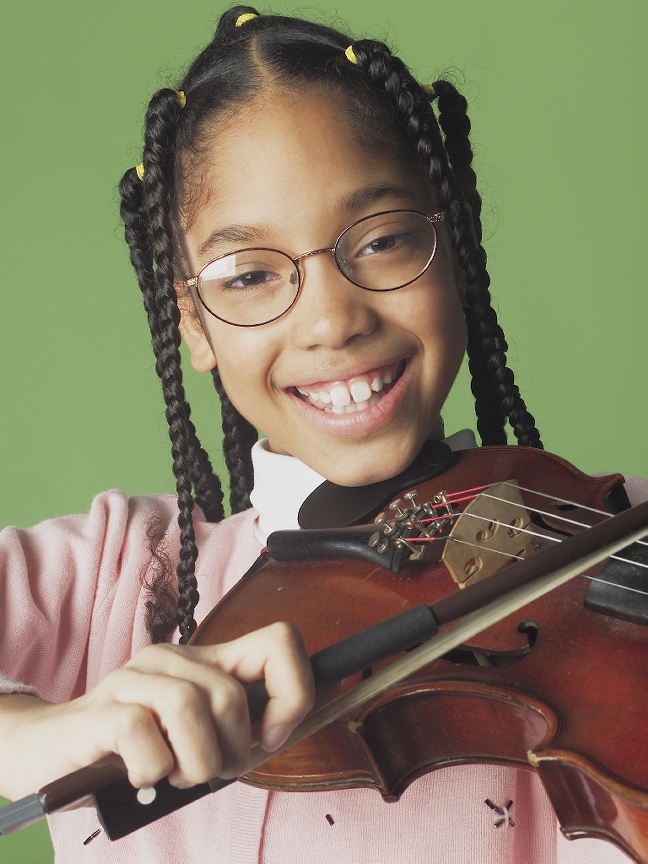 Look on with wonder as an American public school system that has 28,000 students in grades 4 to 6 participating in instrumental ensembles (with 116 teachers teaching them) sees the program as a fit candidate for the chopping-block. This in a county of comparative affluence, largely populated by employees of the Federal government. Do we need a better illustration of how pitched the battle for enlightened education must remain if we are even to approach the magnificent musical values and experiences with which the poor of Venezuela are endowed?
Whether a petition signed by people across the country will have any effect on such attitudes may be questionable, but the first link above provides an opportunity to test that.

Music and Upper-Body Exercise
November 1, 2009
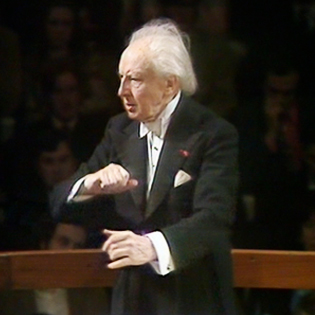
Ever noticed how many conductors seem to live to a healthy old age?
New Medium, Old Message
October 27, 2009
Old Medium, New Message
October 27, 2009

The enormous discography of the tenor Robert White has gone out into the world (starting when he was the child star Little Bobby White) in 78 rpm, 45 rpm, LP 33 1/3 rpm, cassette, CD, and mp3. Last month, the singer had the extraordinary opportunity to record on the wax of a 1909 Edison cylinder recorder. In that early process, the sound is captured, with no electricity at all, by purely mechanical means. The recorder’s motor is powered by a wind-up spring mechanism, just as when Mr. White’s father, who preceded him in radio and recording stardom as “The Silver-Masked Tenor,” made his first recordings in 1915. Even though the electrical microphone changed the process of sound recording quite drastically in 1924, this audio file makes it clear that the old method was remarkably effective, too:
Since George W. Meyer’s song “Brown Eyes, Why Are You Blue?” was written just as electrical recording was being introduced, this may be its first outing on wax. The new performance was recorded with Vince Giordano and his orchestra (“The Night Hawks”) before a live audience direct to the cylinder. The engineer, Peter Dilg of the Baldwin Antique Center, is a specialist in historic recording devices. Thus, in Robert White (whose birthday is today), the Juilliard faculty now can boast an Amberol Cylinder Recording Artist.
 RogerEvansOnline.com