East Side, West Side
December 20, 2009

I’ve been thinking about Stephen Hough’s post in his London blog, which is always a joy to read. I know no more thoughtful and informed observer of musical and spiritual values (if, in this context, we need to distinguish between them). But I can’t entirely avoid the suspicion that he is indulging in a mild form of the Romanticism toward Eastern Orthodox cultural artifacts that exists in far more virulent forms elsewhere. (I’m looking at you, John Tavener.)
First, the very subjective issue of “masculinity” in the music: The performance in question happens to be by adult males alone, which is not typical or even, so far as I know, common in the day-to-day practice of Orthodox liturgy. To compare an exquisite (concert) performance, as in the video that I posted yesterday, to a particularly debased sort of Catholic Gebrauchsmusik as represented by the playing through, on an electronic keyboard, of “Bind Us Together” — a song I have never heard in what I had thought was an exhaustive exposure to literally every kind of Catholic liturgical music in English — is surely an exercise in apple-orange comparison.

It is important to recall that the Slavonic music in the video is not traditional in any meaningful way. It’s nineteenth-century music, with the compositional vocabulary of its style, which is almost as unrelated to traditional Orthodox chant as “Bind Us Together” is to the Roman Gradual, except perhaps in some nontechnical, unmeasurable spiritual sense. It is true that Western liturgical music has gone on expressive flights (and excessive ones at times) unheard of in the East. There is nothing equivalent to the spritely masses of Mozart or the perfumed ones of Gounod in Russia. But might this be as much a result of the banning of musical instruments, and all the formal and expressive possibilities (or temptations) that come with them, as of any inherent questions of liturgico-musical taste — not to mention of a greater “masculinity”?
All this speculation on my part is not entirely abstract, since it happens that this very morning, I heard — in the midst of the most exquisite, and actually rather muscular, singing of Gregorian chant — two Bruckner motets. The difference between these a cappella works and that of Pavel Chesnokov in the video is not so much that of sensibility, gender difference, or even verbal text. It’s much more that Chesnokov was a competent composer of inoffensive music that can sound very moving when well-performed, which also may owe our enthusiasm for it to the small doses in which most of us will consume it. Bruckner, on the other hand, was a genius — some of whose music is emphatically not characterized by brevity. But his motets, which he composed in great quantities, encapsulate in concentrated form what we hear in his vast symphonies (which in turn were said to reflect the incomparable organ improvisations that were even more characteristic of his actual musical career as he experienced it).
I attach a performance of one of the motets that I heard this morning at the Church of St. Ignatius Loyola on Park Avenue. Is it so different from the Russian Orthodox music of a sophisticated composer like Rachmaninoff? And yet Bruckner’s vocabulary is near the outskirts of the great body of Catholic church music. Many lesser 19th-century Western composers would sound much more like the Orthodox example in question. (I employ this video of the Ave Maria because it is quite comparable to the rendition that I heard this morning and because it includes the score of the motet. There are other worthwhile performances at this link.)
UPDATE: I forgot to mention that, since historians say that polyphony entered into the Russian church music via Poland and the Ukraine, that repertory in its post-chant guise is hardly innocent of Western — even Roman Catholic — influence. This even before Peter the Great imported Italian maestri di cappella. Peter’s lust for a Westernization of Russia was of a piece with the fact that Artemy Vedel, Maxim Berezovsky, Stepan Degtiariev, Stepan Davydov, Dmitry Bortniansky, and the Archpriest Pyotr Turchaninov all studied composition under Italian masters.
Robert White sent this to Stephen Hough, who immediately put it up on his Telegraph blog; then he kindly retailed it to me, and I post it for the refreshment of readers here. I am also told:
A fine young soprano who lives in Moscow just wrote me back saying that she’s heard that the young singer is driving a taxi these days!
(This is not technically music for this time of year, since it deals with the appearance of Gabriel to the Virgin nine months earlier — the Annunciation, which is March 25 in the Western calendar. But it is in every sense fitting preparation for Christmas.)
A Voix Wonderfully Humaine
December 18, 2009
Here’s one more Grammy-season video. It introduces Derek Bermel‘s Voices, for which he is nominated for the Best Performance Solo Instrumentalist with Orchestra, along with the very deserving musician behind the Boston Modern Orchestra Project, Gil Rose. Those who are looking for original voices in current music resort in great numbers to the highly varied compositions of Derek Bermel, and this whole performance is being universally lauded:
Not Books but Fodder for Future Books
December 16, 2009
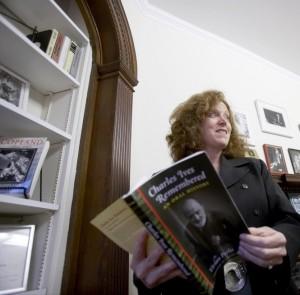

I have already enthused here about the work the Yale School of Music is doing to document important living and recent American composers. Now, appropriately enough — since Copland was one of the first composers whose own viva voce testimony was captured by the project — the Aaron Copland Fund for Music has donated a chunk of change to enliven things even more. Here’s the press release.
Foxy Comic Opera
December 14, 2009

Long before I had any professional contact with it, I was a huge fan of John Musto’s comic opera Volpone, so it was very cheering news that Wolf Trap Opera’s recording of it is Grammy-nominated as Best Opera Recording. Since it was not only Wolf Trap’s first opera commission — to which they’ve already devoted two separate productions — but their first commercial recording as well, it looks as though they know how to pick — and be — winners.
The jaunty music in this ninety-second video is what was played for the curtain calls:
The Grecian Formula
December 11, 2009
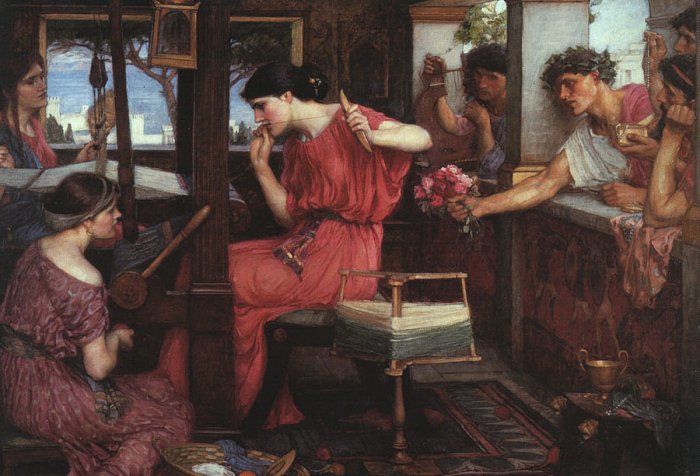
Two nights in a row I sat in a darkened room and watched, and especially heard, great stories of enduring power brought to life as vivid as that of the most dramatic current headlines. More so, actually, since the only reason we’re still rehearsing these millennia-old plots is because they are so dead-on. Savvy opera composers have long known that a sure-fire libretto can emerge from these stories. Stories that have long since proved their universal applicability will find a target in virtually every human heart.
So it was on Wednesday evening at the Manhattan School of Music and on Thursday evening at the Metropolitan Opera House.
I remember once in my youth having made some ill-considered, boiler-plate remark about music as a universal language, only to be told that, for disproof of that idea one need look no further than the reputations of Reger in Germany and of Fauré in France, where they occupy a status reserved for Bach in the United States. While, at this date, Fauré’s passport gets a good deal more use than Reger’s does, he owes his mobility mostly to the songs and above all to the early and atypical Requiem. His late and mature opera Pénélope is not much heard in comparison, and it was good to encounter it in fine shape at the MSM. This will never be a wildly popular piece, and Fauré must have known that he was composing a kind of twentieth-century musica reservata. But for those who can do without a lot of action and can bask in the sublime for a couple of hours, this is an opera to treasure. There are to be two more performances of this production, and I recommend it to all who are within reach of it.
Of course one reason that the story of Faithful Penelope, as my first-year Latin textbook always called her, is so rewarding is because an expectation is relentlessly built up, meditated upon, made the hearer’s own, and then rewarded. It is not just the expectation that Penelope will be reunited with her Ulysses, for we’ve known all evening that that event was already set up with the arrival of the disguised king. Whether we allow ourselves to realize it fully or not, what we are really waiting for, as we admire the heroine’s constancy and bathe in Fauré’s chaste opulence, is the slaughter of those annoying anti-Ulysses suitors. This is the real climax of the action, and the inevitable love-duet afterwards is, in plot terms, a victory lap just as much as the final “Lets be merry” chorus of Figaro is.
In Strauss’s Elektra, while the return of the wandering Orestes is longed for, what we really are building up to is the violent murder of the mother and her guilty spouse. We are asked to join Elektra in the most nakedly bloodthirsty suspense. And just as the music of Fauré leads us into a female mind of the utmost refinement and gentleness, that of Strauss invites us to the most primitive kind of vengeful rage and unmitigated hate. The Met’s first presentation of its current revival of the work was pretty overwhelming — largely due to the orchestral playing and the magisterial Klytemnestra of Felicity Palmer.
Clytemnestra is of course the reverse-image of Penelope: she’s the unfaithful wife upon whom revenge must be taken by her children. Oh, dear. These Greeks really did know how to lead us into subjects and psychological situations we’d rather avoid, didn’t they?
Existing in Time, Not Space
December 8, 2009
An elegant reminder of music’s evanescence:
Tip of the hat to Andrew Sullivan and Beautiful/Decay
Improvisation as Lying
November 29, 2009

Musicians who improvise know this on some level. But Jonah Lehrer (whose valuable writing has been referred to here before) writes in a new article of some studies of damaged frontal lobes that put improvisation in the realm of confabulation, or a kind of lying with no immoral implications. In it he refers back to an earlier article in which he told us that
The first study, led by Charles Limb of the NIH and Johns Hopkins University, examined the brain activity of jazz musicians as they played on a piano. The musicians began with pieces that required no imagination such as the C-major scale and a simple blues tune they’d memorized in advance. But then came the creativity condition: The musicians were told to improvise a new melody as they played alongside a recorded jazz quartet.
While the musicians riffed on the piano, giant magnets whirred overhead monitoring minor shifts in their brain activity. The researchers found that jazz improv relied on a carefully choreographed set of mental events, which allowed the musicians to discover their new melodies. Before a single note was played, the pianists exhibited a “deactivation” of the dorsolateral prefrontal cortex (DLPFC), a brain area associated with planned actions and self-control. In other words, they were inhibiting their inhibitions, which allowed the musicians to create without worrying about what they were creating.
But it’s not enough to just unleash the mind — successful improv requires a very particular kind of expression. That’s why the fMRI machine also recorded a spike in activity in the medial prefrontal cortex, a fold of frontal lobe just behind the eyes. This area is often linked with self-expression — it lights up, for instance, whenever people tell a story in which they’re the main character. The scientists argue that this part of the brain is required for jazz improv because the musicians are channeling their artistic identity, searching for the notes that best summarize their style. “Jazz is often described as being an extremely individualistic art form,” Limb says. “What we think is happening is when you’re telling your own musical story, you’re shutting down impulses that might impede the flow of novel ideas.”
In the second experiment scientists at Harvard investigated the varieties of musical improvisation. They recruited 12 classically trained pianists and had them spontaneously create both rhythms and melodies. Unlike the Hopkins experiment, which compared brain activity between improv and memorized piano melodies, this brain scanning experiment was primarily designed to compare activity between two different kinds of improv.
As expected, both improv conditions led to a surge in activity in a variety of brain areas, including parts of the premotor cortex and, most intriguingly, the inferior frontal gyrus. The premotor activity is simply an echo of execution — the novel musical patterns, after all, must still be translated by the fingers. The inferior frontal gyrus, however, has primarily been investigated for its role in language — it includes Broca’s area, which is essential for the production of speech. Why, then, is it so active when people create music on the piano? The scientists argue that expert musicians create new melodies by relying on the same mental muscles used to create a sentence; every note is another word.
We have all learned, to one degree or another, not to lie — or at least not to get caught at it. In improvisation, we need to get caught at it. I have long contended that education in music is more a matter of freeing up capabilities than it is acquiring them. Picasso says something like that, as Lehrer quotes:
“Every child is an artist. The problem is how to remain an artist once we grow up.” From the perspective of the brain, Picasso is on to something, as the frontal lobes (and the DPLFC in particular) are the last brain areas to fully develop. And so the super-ego settles in, and we become too self-conscious to create. Obviously, we need the frontal lobes to function – just look at the tragic life of SB – but every talent comes with a tradeoff. When we repress our urge to confabulate we also repress the urge to create. To quote Picasso once again: “Art is a lie that makes us realize truth.” But it’s still a lie.
 RogerEvansOnline.com