Fry the Handelian
January 21, 2008
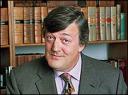 The Times of London reports that the astounding polymath Stephen Fry, writer, actor, comedian, novelist, columnist, filmmaker, television game-show host, and blogger of genius is planning a movie that will go into Handel’s personal life. Since that’s a subject that the composer has managed to keep pretty dark for three hundred years, such an announcement would be worthy of note even without Fry’s earned reputation for seriousness of purpose and thoroughness of craftsmanship.
One of my first thoughts on reading the news was a hope that Fry might actually play the rôle of Handel in the film, since both his dramatic gifts and his very physicality might be at least as appropriate for the musician as they were for Wilde. But the fact that he broke an arm in Brazil last week might get in the way of that.
The mention of the singer Mrs. Cibber in the Times article reminded me that the revered society figure Mrs. Delany had been one of her defenders. Since student days I have been collecting information on Handel’s London career, trolling through letters and diaries. So I’ll use a coming big movie as an excuse to pass on some of that information. I imagine I’ve covered some of the same ground below that the movie will tread:
HANDEL AS SEEN BY A MUSIC-LOVING LONDON LADY
In the year ’10 I first saw Mr. Handel who was introduced to my uncle by Mr. Heidegger … We had no better instrument in the house than a little spinet of mine, on which the great musician performed wonders. I was much struck with his playing, but struck as a child, not a judge, for the moment he was gone, I seated myself at my instrument and played the best lessons I had then learnt. My uncle archly asked me if I thought I should ever play as well as Mr. Handel. “If I did not think I should,” cried I, “I would burn my instrument!” Such was the innocent presumption of childish ignorance.
And such were the means whereby one of the most powerful musical personalities of the Western tradition fit himself into the society he aimed at pleasing. And thus, by her own account, began the association between the visiting “composer of Italian musick” and the child who was to become the most admired old lady in England. Mary Granville (later known as Mrs. Pendarves and later still as the celebrated Mrs. Delany) was an intelligent amateur of music, a tireless supporter of Handel’s music in particular, an intimate of the royal family, a friend of Swift in his later years, and—fortunately—an indefatigable and brilliant writer of letters. Through her good offices we have as lucid a description as we could ask of Handel as he appeared to the highest stratum of London society. Much as she was to encounter him over years, and in many situations, it is fitting that her first impression of him was as an inventive performer devising music for the pleasure of the company he found himself in.
Even when Handel was young, Miss Granville found his appearance solemn, resolute, and “greedy” (he was often called gluttonous); he seemed to her unengaging in manners and droll in accent. She, like most of her neighbors, nevertheless found him ultimately irresistible. On the first occasion of their meeting, when he was still in the first flush of his Italian experiences, he must have been at work on Rinaldo (“the first opera that ever he made in England”), and had only just begun his temporary role as a fashionable novelty in the capital. Unlike myriad other short-term foreign favorites of the leisure classes, he would convert his celebrity into something more lasting. The lady would later know enough to take sides intelligently in the rivalry between Handel and Buononcini, among others, while the sideline skeptics recited this markedly unprophetic jingle:
Some say, compared to Buononcini,
That Mynheer Handel’s but a Ninny;
Others aver that he to Handel
Is scarcely fit to hold a Candel.
Strange, all this Difference should be
‘Twixt Tweedledum and Tweedledee.
All things connected with Mynheer Handel took on a certain interest for society. It even surpassed the craze for keeping up with the leading Italian singers, although Mrs. Delany, in a letter to her sister, is interested (with a type of curiosity that Handel himself always managed to keep at bay) in the very private affairs of Cussoni, the soprano:
Mrs. Sandoni [Cussoni’s married name] is brought to bed of a daughter: it is a mighty mortification it was not a son. The moment she was brought to bed she sung La Speranza, a song in Otho … Mrs. Leigh is transported with joy at living once again in dear London and hearing Mr. Handel’s new opera performed by Faustina, Cuzzoni, and Senesino.
(The respectable Mrs. Delany’s minute interest in the stars was not merely that of a pharisee or scandal-monger. Hearing the notorious adultress Mrs. Cibber sing “He was despised” in the first London performance of Messiah, the pious lady exclaimed, “Woman, for this be all thy sins forgiven!”)
New Beginnings
January 20, 2008
 Every four years on this date somebody gets sworn in as President of the United States, and today I’m inaugurating a new administration of my own in this Web site. I promise that its constitution will be benign — if unavoidably autocratic. It will exist to treat, in one domain whose borders will gradually extend, music and literature the sharing of which I find so conducive to my own life, liberty, and pursuit of happiness.
It also happens to be the anniversary of the day when I was first “given to light,” as they say in Spanish. So for that reason, too, it seems a good day to dar a luz a venture of this kind.
I hope you’ll join me here often, always remembering that I welcome backtalk.
 RogerEvansOnline.com