Blythe Spirit
February 14, 2008
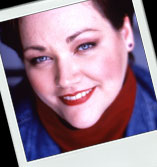 The Chamber Music Society of Lincoln Center has launched an admirable new sally into “American Voices,” chamber music throughout United States history. As doesn’t always happen in such series, full attention is being paid to the human voice as a chamber medium.
As part of this Winter Festival, one of the truly distinguished singers of the moment, the mezzo-soprano Stephanie Blythe, was announced to give a master class on American art songs, and a happy few of us filled the Rose Studio on Valentine’s Day. Apart from the context-providing exception of Stephen Foster, all the compositions were from living American composers: Bruce Adolphe, William Bolcom, Lowell Liebermann, Ned Rorem, and Stephen Sondheim.
Read the rest of this entry »
Delights of the Chamber
February 13, 2008
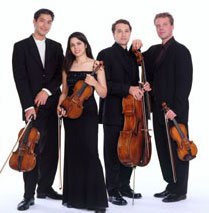 The Miller Theatre at Columbia University, under the régime of George Steel, consistently shows an unusually enlightened approach to producing concerts. Instead of just relying on repertory and performers to do all the work, they show an intelligent awareness of the component that place plays in a musical event.
They have been producing, besides their showcases of new music (like the stunning all-Salonen evening) and standard repertory in the Theatre itself, other performances on the campus and off. There are smaller concerts in the chapel of St. Bartholomew’s on Park Avenue and Casa Italiana at Columbia, large choral works at the Church of St. Mary the Virgin (like an exquisite Robert Parsons evening in December), and the resourceful use of other venues, either repeated or one-off. They are in the vanguard of experiments with the old Park Avenue Armory as a mega-concert space, which Gérard Mortier has said he hopes to use for Messiaen’s St-François d’Assis. We owe them a lot for all this.
Miller is currently presenting the multi-award-winning Pacifica Quartet in the complete quartets of Beethoven. The programs are presented during the lunch hour in a visually nondescript but dignified room that rejoices in the imposing name of Philosophy Hall. The space has lively salon-like acoustics, Siamese prayer panels on the walls and a random Lachaise-like sculpture, among the usual computers and files. In other words, it’s a perfectly normal academic environment where people are encouraged to bring their lunches. The only thing I saw being consumed was Shakespeare’s food of love, but there were plenty of other evidences of the comfort people felt in being so close to what was, in the event, superior music-making. The chairs were in the form of a square C, with only four rows of them, but with standing-room to the full extent that floor-space allowed. The players were seated on a platform at one of the long walls of the rectangle.
Read the rest of this entry »
Leontyne Price is Eighty-One Today
February 10, 2008
Leontyne Price singing in the 1960s on The Bell Telephone Hour:
Leontyne Price singing at The Pierre in 2008:
Gifted youngsters, observe and take heart!
Vita may be comparatively brevis, but ars longa when you take care of your voice as she has.
A Good Attitude
February 9, 2008
 It’s easy sometimes to forget (apart from our closest colleagues) how fine many of the people who pursue the musical arts are. For a good, concentrated reminder, see Joyce DiDonato’s latest blog entry. Her gratitude for and dedication to her work and her colleagues is stunning — and cheering.
The Long Arm of the Met: Beyond Opera
February 8, 2008
 It was striking but unsurprising when the Metropolitan Opera’s success with high-definition broadcasts into movie theaters set off related developments in opera houses internationally. But an e-mail survey that came out yesterday from the New York Philharmonic shows that America’s oldest orchestra is also interested in joining the fun. The survey contained a long and detailed series of questions, and I’m wondering how many people were, like me, curious enough to see it through to the end. It was an unusually frank questionnaire, leaving little doubt as to its objects.
Read the rest of this entry »
Pergolesi in Two Guises
February 6, 2008
See yesterday’s post.
Excerpt from the Stabat Mater: Eia, Mater, fons amoris
Sung by René Jacobs
And when Pergolesi moved from church to opera house, the musical vocabulary remained the same.
Excerpt from the first aria of La serva padrona: Aspettare e non venire
Sung by Donato di Stefano
Niche Fame
February 5, 2008
 An e-mail from my niece, who sings in the choir of Saint Luke’s Cathedral in Orlando, tells me that they’ll be performing Théodore Dubois‘s Seven Last Words on March 9. This reminds me that, with Lent beginning tomorrow, whole swaths of the repertory that play little part in concert-hall life will received hundreds of performances around the globe. Dubois, who was organist of the Madeleine in Paris and director of the Paris Conservatory (not to mention being godfather of Nadia Boulanger) was once a considerable musical influence, now not much thought of. However, he has been widely performed through that one highly dramatic work, composed in French for the pious meditation of fashionable Parisians.
This got me to thinking of another work that occasionally appears in concert halls but is drastically present in churches between now and Easter, the Stabat Mater of Pergolesi. What is its origin? What else is it related to?
Giovanni Battista Pergolesi (1710–1736) brings something new to history: he was the first composer to enjoy posthumous fame after an obscure career and a pauper’s burial.
Pergolesi’s last two works were settings of expressive Marian texts, Stabat Mater and Salve Regina. While the Stabat Mater was to become his best-known work (eclipsing the Scarlatti setting that it had been modeled on), much of Pergolesi’s fame came from his comic opera La serva padrona. That genial comedy’s celebrity is understandable, since it epitomizes the progressive opera buffa that Rousseau and his allies tirelessly propagandized. More crucially, the style of La serva padrona was indispensable to the Mozartian operatic synthesis.
Read the rest of this entry »
 RogerEvansOnline.com