Blogging from A.M.S. Nashville
November 7, 2008
 Last night (these things going on till 11 p.m.) at the Annual Meeting of the American Musicological Society, I was present for the most exciting session I have experienced in these often important but all-too-laconic gatherings.
If you have ever had a course in 18th-century counterpoint or read any of the treatises of the time, you have probably wondered, as I certainly have, how the era produced limitless-seeming numbers of performers trained by such methods who could not only play creatively from a figured bass but could improvise the most complex polyphonic structures with ease and confidence. It turns out that it didn’t.
The purposes of the literate tradition, which is what we have naturally depended on in the relatively short history of musicology, turns out not have been intended to train professional-level musicians who would practice their craft in court, church, or theater. Its descriptive function had instead been for the use of amateurs (not then a derogatory term) who wanted to understand the process but not go through the years and effort involved in mastering it.
In place of using those texts to teach the actual practice of counterpoint, there existed what were called partimenti all over Europe. These were pedagogical bass lines from which students perfected their art — originally the orphan virtuoso-candidates in the charitable conservatorii that distinguished Italian musical life. But the use of this technique spread all over Europe and dominated professional training of performers right into the 19th century.
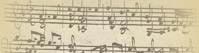
Why haven’t most of us heard about these before if they were so amazingly important and effective? Well, in addition to that inevitable literary bias in our music departments, we didn’t quite know what these exercises were. Libraries all over Europe abound in literally thousands and thousands of them in thousands of books, each often containing hundreds of pages. One is attributed to J.S. Bach, and I watched in awe last night as a traditional partimento was displayed on a screen as we heard it reproduced in the bass line of a Bach concerto movement.
I also had a conversation today with a professor from Canada who now teaches counterpoint using these resources. How I wish I’d known about them when I was studying counterpoint (not to mention when teaching it)!
There are also rumors of stylistic investigations of Mozart’s music based on his training under his father using these bass lines and the “rules” that made the proficient able to see a contrapuntal and harmonic structure in what would appear to the non-initiate as a bare line of music.
Obscure no more, the partimento now gets its own vast site online, supported by the National Endowment for the Humanities, describing the phenomenon and providing many samples. I commend it to all who are interested in the genesis and performance of music during the long period when this was the way professionals trained.
UPDATE: It seems only fair that, if I’m going to praise an A.M.S. session so heartily, I should name the person who chaired it, Robert Gjerdingen of Northwestern University. Other participants were Giorgio Sanguinetti (Univ. Tor Vergata, Rome), Rosa Cafiero (Univ. Sacro Cuore, Milan), Thomas Christensen (University of Chicago), Ludwig Holtmeier (Schola Cantorum, Basel), William Renwick (McMaster University), Johannes Menke (Hochschule, Freiburg), and Gaetano Stella (Univ. Tor Vergata, Rome).
Give Piece a Chance
November 4, 2008
 The effort to program interesting and non-hackneyed repertory never need cause us to stoop to music of low quality. Not when there is still plenty of novelty among the prime products of acknowledged masters, providing standards by which also to judge the new works that come our way. It was with that in mind, and not a little excitement, that I went last night to hear an important and underperformed work of Messiaen coupled with one of Mendelssohn’s most extensive creations.
Messiaen’s Ascension I knew well in its later version for symphonic organ (for which he composed a different third movement) but had never heard the orchestral original live. The Mendelssohn Second Symphony (Lobgesang or Hymn of Praise) I had last heard live in childhood but had studied closely ever since, frankly carrying a torch for a masterpiece that has become largely unknown. Read the rest of this entry »
A la Mode
October 22, 2008
 I inevitably talk a lot with classical-music composers and performers about how they get their stuff out there. With all the old and new ways we have of doing that, word of mouth — buzz, in the current cant — is still the ultimate medium. While the differences in fashion and classical music are significant (though Renée Fleming is doing her part to blur the boundaries), their promotional muscles are far more highly developed than ours. The guru of fashion blogging has this to say in an interview in today’s MediaBistro:
Do you think that online popularity is correlated to commercial success for fashion lines or designers?
Basically, what I think that everybody who is designing fundamentally wants is attention. More attention means more brand awareness. More brand awareness means more people who go to the store and says, “Oh, that’s by Thakoon, I read all about him.” I think that there are lots of ways that this works. It’s maybe not as ching-ching right away, but it definitely builds an awareness, a familiarity. It’s a TV commercial. It’s television. You know, there are three monitors in this world right now: on your cell phone, your television, and your computer. You’ve got to deliver that message. People are walking around, plugging in, and sharing. And sharing is a great thing, because it’s word of mouth. So fashion as word of mouth. We’re making it in the electronic world sound like it’s the newest thing since cream cheese, but it isn’t, that’s word of mouth!
It really is the same old dynamic, whether via old medium or new.
If 20th-Century Music Were a High-School Popularity Contest:
October 17, 2008
The Juilliard Does Berio
October 14, 2008
 While le tout New-York was across the street at the Metropolitan Opera House hearing the prima of John Adams’s Dr. Atomic, I couldn’t bear to miss another chance to hear smaller-scale contemporary music in a place that seems to be cultivating it with a success that only increases. (I will hear the second performance of the Dr. Atomic production.)
It is gratifying to report that Axiom’s Messiaen, lauded here, was very far from being a one-off triumph. Last night’s tribute to the School’s former faculty member Luciano Berio was equally impressive in its virtuosity and its dedication to the music at hand. In a different way from Messiaen’s, Berio’s music requires a concentration on detail, especially melodic detail, that sometimes recalls the distinctions familiar in Baroque music between what is structural and what is ornamental. Or so it seems to me.
Those unfamiliar with Berio’s style can do no better than listen to performances by his first wife and muse, Cathy Berberian, for her singing is surely the ideal that every instrumentalist — even unto the very percussionists — would do well to keep in mind as a model.
But, speaking of models, I don’t know what Jeffrey Milarsky does to get these performances from the students, but it seems to work. Any idea that it’s mere self-motivation on the part of obviously gifted young musicians seemed to be contradicted by the testimony of the young soloist who, having finished her punishing part, came into the theater and happened to sit next to me. When I asked how much coaching she had received from Mr. Milarsky in performing her musical feat, she immediately and strongly suggested that his help had been crucial.
So, if you’re at all open to difficult music well performed — and performed by musicians who seem unconscious of its difficulty –, I recommend watching for performances by the Julliard School’s Axiom. Even if you don’t happen to like a specific composition being performed, you can delight in the skill and dedication displayed by the performance. And if an eloquent performance leads to an appreciation of the work being interpreted, it certainly won’t be the first time in music history that such a thing has happened.
Must YouTubers Keep Walking the Plank?
October 13, 2008
 I used to spend lots of time contemplating the conditions under which texts and music were distributed and elaborated before the unexampled strictures of modern copyright law. In fact there was a time when I got paid to do so in academic dress. But I was perennially struggling to fit our current legal situation into the stream of cultural history. It can’t be done.
More and more people are realizing that new media can bring — and probably will make inevitable — a return to the earlier view of “intellectual property” that enabled the great flowerings of creativity in the past. The Wall Street Journal takes up the cause in an intelligent way here.
Gentle Readers of RogerEvansOnline:
October 5, 2008
 You’re not just readers anymore.
One of the exciting things about cyberspace and the culture it enables is that Things Keep Changing. The changes are, with remarkable frequency, for the better. And, by the very nature of the new media, it’s easy to change with them.
When I began this site back in January, I took good, sober advice that recommended not having promiscuous commentary posted from the readership. Control was thus enhanced. But control (contrary to what some political philosophers will try to tell you) is not one of the higher virtues. Participation and mutuality, while not necessarily as tidy, can be much more generating of ideas and have great potential for bringing raw thought to greater refinement. If two heads are better than one, how much better all of yours together?
After eight months of this site, and plenty — plenty — of good comments from you, whether by e-mail or chance encounters on the street, in restaurants, or at those musical events so many of us resort to, I’ve grown to covet your ad libitum discussions here. Right here. It will cut down so much on travel costs to gather your comments and, besides, will make you beneficiaries of each other’s insights instead of my keeping them all for myself.
So think of RogerEvansOnline as a sort of digital Liberty Hall (my friends who run the Data Lounge already having taken the best name possible). But, like any home of liberty that wants to retain its freedom, R.E.O. will endeavor to retain its character of entirely positive advocacy of arts and letters. Personal attacks will of course meet with the extinction made so easy in cyberspace. It will be as though they had never been. (It’s hard to believe we ever settled for Wite-Out, a feeble attempt at cosmetic obliteration in comparison.) But I trust that recent months here, with all their gratifying reaction from thoughtful people of edifying aims, will have led to a site that will cause people to look elsewhere for that sort of thing anyway, so you who do come are just the thinkers whose comments the site and its readers are most likely to value.
So comment away!
________________________________
To comment, simply click on the title of the post in question to find the handy form that will receive your words.
________________________________
UPDATE: So it turns out that you weren’t as eager to comment as I thought. The dynamics of new media are never as predictable as we often assume. I’ll keep the comment facility up for a while longer, however, since I had been under the impression that it was much desired by some.
Musicology More Broadly Construed
October 4, 2008
 The Greater New York Chapter of the American Musicological Society met today, and I was able to attend the morning session. It gave unmistakable signs of great changes in the discipline of musicology.
Read the rest of this entry »
 RogerEvansOnline.com