“Musicians’ Brains Are Different from Other Peoples'”
March 16, 2010

A Barcelona neuroscientist has turned her attention from Down Syndrome and cognitive disorders to the brains that musicians navigate their world with. If you’re a musician, the non-musicians around you who think your mind works differently from theirs are right. By the same token, you are on solid ground if you sometimes find others’ ways of thinking somehow organically different from your own. The following is translated on the fly from a new interview in El Periódico de Catalunya:
– Why does music exist?
“Darwin didn’t figure out why humans spend so much effort on an activity with no clear biological function, but in the brain there is an impulse that encourages us to listen to and produce music.”– My drive to produce reaches no further than tapping my foot.
“The brain of non-musicians reacts with the right hemisphere, the more emotional one, which registers the melodic contour. But the left, more analytical hemisphere is activated in musicians. They are preoccupied with the musical syntax, the language.”– Do they perceive it in a different way?
“You could say that musicians have a brain unlike non-musicians. There are also differences between composers and improvisors.”– What makes them different?
“Many conductors and composers have auditory imagery. You can ask them to play without sound and execute all the motions. It is as if they hear with the mind. Also tonal memory, which allows us to remember the sequences of tones.”– Music is in my head!
“There are separate regions of the brain that specialize in recognizing a tone or a melody. Some can always tell a C is a C, thanks to what is called ‘absolute pitch.’ People who have absolute pitch display an asymmetry in the planum temporale, an area of the brain that deals with language.”– And the hands of virtuosos?
“Music sets off distinct and complex skills in the brain. Violinists correct the position of their hands depending on what they hear. Audiomotor adjustment is exact.”– Genes are everything!
“Heredity is a factor. 5% of people are tone-deaf, and 15% don’t sing. Entire families! But don’t be fooled: while there’s something that’s innate, environment is crucial.”– At this altitude she tells me this [or can a reader provide a better translation?]!
“This is shown by studies of twins reared apart. We also know that listening to Mozart improves learning.”
Thanks to José Franch Ballester for pointing out the original article.
Now and Then
March 14, 2010

The revolution that the Internet has brought, and is bringing, can both horrify and exhilarate — or, more likely, do both at once in different proportions in different people. As an important new article points out, the Internet is eminently about Now while also offering unprecedented facilities for harnessing the lessons of history.
This somehow reminds me of the burden/opportunity of being a musician today. Our ancestors, right up until quite recent times, were interested exclusively in the music of their time and place. The Now, in fact. These days, musicians need just as much of the past’s traditional Now — at least as incarnate in fundamental skills and the ability to produce well-formed music in the present — while at the same time being burdened/endowed with a very extensive and conscious past. The degree to which this is true is unprecedented. In “classical” music, at least, composers and performers are almost universally informed by the past far more than ever before.
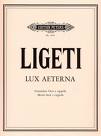
It is a commonplace of automatic-pilot journalism that Schoenberg broke with the past. But it is also true that he did so furnished with a knowledge of traditional harmony and counterpoint that may have been all but unequaled in the musical culture in which he was rampant. Composers now have to be prepared to have their work compared with everything from the phasmagoric twelfth-century polyphony of Notre-Dame de Paris to the sometimes similarly acrid effusions of Radiohead. And a modern keyboard performer may need to be able to play Ligeti etudes one night and Baroque continuo from a figured bass the next — while using the very latest digital technology to convey to her students something of the background of virginal-playing in the Elizabethan court one semester and of the Parisian experiments of Messiaen the next. The same knowledge of harmony will be needed for a thorough treatment of all of these.
The more I think about it, the more I suspect that the well-prepared modern musician may be of all people the most readily-naturalized citizen of that global cyberworld that is now here, and is to come.
Siegmund Levarie, 1914-2010
March 11, 2010

I wonder how often it is that a professor dies and students who were never close personal friends of his feel that they’ve lost someone especially important to them. That feeling has been mine, not only on hearing of Professor Levarie’s passing but in hearing for some time now that he was fading out of this world. He was, I gathered, one who was not dying from disease but simply of growing older and older. He has now passed away — to use what is usually a euphemism but seems right in this instance.
This was a man of almost unbelievable accomplishment and humanity, whom it is perfectly possible that most of my readers will never have heard of. Born Siegmund Löwenherz on the fateful day when Austria gave its ultimatum to Serbia and set off the Great War, he was awarded the Ph.D. degree at the University of Vienna in 1938 and, as son of the most prominent Jew in Austria (his father being official President of the Jewish community there), managed to get out of the country just in time to save his life. He wound up at the University of Chicago, where he not only helped get musicology as a discipline established in the United States but started the first of the collegium musicum experiments that now abound in this country. There are people who still rave about the performances that he conducted in Chicago in those days — like Susan Kagan, who years later did a doctorate under Levarie in New York.
He then went to teach at Brooklyn College and, in the late ’60s, was one of the founders of the unexampled brain-packed faculty of the new Ph.D. program in music of the City University of New York Graduate School, which is where I first encountered him — in a class on Greek acoustic theory called Experiments on the Monochord.
As he would not have said: “Oy.”
I could hardly believe the mind I was encountering. The man simply knew everything about music. That’s something I don’t say lightly. He just did.
I’ll now allow Vivian Ramalingam, who knew him far longer and better than I did, to take over here in the words of a private communication:
He was my first model for what a scholar-musician should be. At 17, I played trumpet under his baton in the Brooklyn Community Symphony, of which he took command after the departure of Milton Katims. As his student, I quickly found that he was a warm, imaginative, enthusiastic teacher, who fostered independent thought in his students. From the outset, he treated me as a potential colleague. Every visit to his office was a new adventure, for he would show me what he was reading, how he organized his file of facts and observations (a commonplace book in a file drawer), and other impedimenta of the scholarly life.
Siegmund’s breadth of interests was astonishing. He, Ernst Levy, and Hugo Kauder were deeply interested in mathematical and numerical symbolism in music. That current of thought forms the background of his colleague Ernest G. McClain’s path-breaking research on ancient mathematics and musical tuning. (Check out his web page!) Siegmund, E. Levy and Robert Sanders would meet in S.’s office daily with brown-bag lunches, to read aloud (in Italian) and discuss Dante’s Commedia. His daughter, Janet Levarie Smarr (a Boccaccio specialist), is presently Professor of Comp Lit at UCSD, and a fine cellist. Her father’s daughter…
Up to his last years, Siegmund went to the hospital frequently, to read to the elderly… The last letter Janet sent to me reported that her father had decided that it was time to drink the wine he had set aside for special occasions. I hope he got to finish it all.
Ave atque vale.
“From the outset, he treated me as a potential colleague.” Anyone who has ever been an avid student will appreciate the profound meaning of that tribute.
I will report only two of my own experiences with him. The first was inspiring, as consisting of a meaningful small kindness. He was an official “reader” of my Ph.D. dissertation in music. I was in my first year of teaching at the University of Pittsburgh and making periodic visits to New York on dissertation business. These could be nerve-rackingly inefficient, since, after all, I was dealing with other people with demanding schedules as well. Conferences with professors commonly began with an hour or two of sifting through what I had written, possible objections to arguments, etc., to be followed by some sort of summation. By contrast, almost the first words out of Levarie’s mouth as I sat down in his Brooklyn apartment were, “Of course I must say first that this dissertation will obviously be acceptable.” Imagine my relief; but imagine also how much more receptive I then was to the ideas he had to impart. The lesson I received then was one I’ve endeavored to imitate in pedagogical situations ever since.
The second encounter that I’ll mention was unintentionally less kind in its effect. My Ph.D. orals were held on a Saturday in Edward O.D. Downes’s apartment in the legendary Dakota, on Central Park West. As if it were not sobering enough to have such an event take place down the hall, as it were, from Rosemary’s Baby, I had a really formidable panel of examiners. Besides Downes, there were Barry S. Brook, George Perle, Sherman van Solkema, Wiley Hitchcock, and Siegmund Levarie. The intimidating situation can be easily exemplified if I tell you that my first question came from none other than arguably the world’s leading authority on his subject, George Perle, saying to me more or less these words:
You have been engaged to curate seven lectures at the Metropolitan Museum of Art on “Music Since World War Two.” Who will be the speakers, and what will be their topics?
Well. I ask you.
And it didn’t get any easier as the hours went on.
It was thus with profound relief that I went back to my little apartment in Chelsea, sat down in my easy chair and turned on WQXR for some random good music to unwind to. But, in my exhaustion, I fell asleep and found myself in the throes of a hideous dream in which I was being quizzed on opera topics. When I woke up, I found that the radio was playing the Metropolitan Opera Quiz, then hosted by Downes, with two of his guests being two other members of my examination committee, Hitchcock and Levarie.
Again, as I don’t imagine the great Siegmund Levarie saying: “Oy.” But even then my own relief was dominated by my admiration for a man who had published as an expert on Greek mathematics, Machaut, Mozart, and many other things — but could also appear scintillatingly as a panelist on a popular opera quiz.
Professor Levarie was a strikingly handsome man, and I’m sorry that the only photo I find of him online is from his very last years. Nothing wrong with that, but you should have seen him when he was only seventy or eighty. If you didn’t know him, you can learn a lot about this fascinating figure’s biography, though not his musical and intellectual achievements, from a written interview posted by the Austrian government and an eight-part video interview with him on the invaluable YouTube.
UPDATE: Vivian Ramalingam has just sent me this delightful bit.
Speaking of his appearances on Opera Quiz, two quips stick in my mind. One came in a discussion of the traditional Cav-Pag pairing. Siegmund said that, as a child, he was taken to a performance in which Pagliacci was paired with a ballet, and that ever since, he felt that he was “one Cavalleria short.” On another appearance, he sang childhood words he and his friends had set to the overture to The Marriage of Figaro, the first line of which (sung in translation) was: “Noodles in the pot.”
Add to: Facebook | Digg | Del.icio.us | Stumbleupon | Reddit | Blinklist | Twitter | Technorati | Yahoo Buzz | Newsvine
Mucho más allá
March 9, 2010

It’s not just El Sistema in Venezuela and Dudamel in Los Angeles — huge as those phenomena are. Latin America’s influence on international classical music seems to be a bigger story every day. Here are two videos about some of Miguel del Aguila’s fascinating chamber music. The first is a one-minute clip:
And the second goes a little deeper:


Somewhere Mendelssohn Smiles
March 8, 2010
A boy of six plays with remarkably mature phrasing:
And a severely handicapped man has a heartfelt fugue that must get out despite all barriers:
What limitations are holding us back from making music today?
Tips of the hat to Jeffrey Biegel and Stephen Best
Add to: Facebook | Digg | Del.icio.us | Stumbleupon | Reddit | Blinklist | Twitter | Technorati | Yahoo Buzz | Newsvine
Bodies Infused With Music
March 5, 2010

I’m just been listening to a marvelous BBC Radio documentary about Diagalev’s Ballets Russes. In it, one of the surviving dancers talks about how, in many of the narrative ballets, the task was just to walk across the stage. “Anybody can walk,” she says. But then she goes on to say that walking in time to the music was the least of it. That every part of the body must be invaded by the spirit of the music, that the arms, for example, must be “infused with the music.”
It strikes me that this has a lot to do with acting in opera. We hear much today about making opera dramatically viable, but almost all the talk is about bringing the values of the spoken theater to the opera stage. How is it that, in the past, opera singers were sometimes rivetingly dramatic without even the slightest resemblance to the quite distinct craft of actors in plays? I wonder if it didn’t have something to do with what the old Diagalev dancer was talking about. There is such a thing as having your whole self so possessed by the music that it will be a partner with the composer, with the orchestra, with one’s own voice, in conveying the drama — the specifically music drama that is the whole point of opera. Not, one suspects, some imitation of what goes on in the legitimate theater.
Add to: Facebook | Digg | Del.icio.us | Stumbleupon | Reddit | Blinklist | Twitter | Technorati | Yahoo Buzz | Newsvine
Happy Birthday, Father Antonio Vivaldi!
March 4, 2010

Great composers don’t always “get” other great composers. Berlioz, in his idolatry of Gluck, devalued both Lully and Handel in irrelevant comparisons to the great reformer. Stravinsky, despite a semi-comprehending admiration for Gesualdo and Pergolesi (whom his imagination tended to recast in his own image), seemed unable to imagine earlier styles of music on their own terms and famously dismissed Vivaldi by saying that “he didn’t compose 400 concertos; he composed one concerto 400 times.” Given the skewed view that once existed of the Italian Baroque and how its music had originally been played, it’s understandable that this music — which is above all “performer’s music” not “analyst’s music” — didn’t reveal its extravagant charms. The charms were not those of the Urtext generation. Goodness knows that the zillions of vinyl representations of Vivaldi’s music that Nonesuch issued in the 1960s, with performances in which provincial German orchestras sawed away rather mechanically, may not go far to explain the dizzying rise in popularity that the music of “The Red Priest” nevertheless enjoyed.
Stravinsky probably didn’t know about the many written accounts of performances of that repertory when it was new. These are replete with descriptions of passionate playing of a sort that we don’t see enough of these days, with audience reactions that often involved even the loss of emotional control. This was not the scenario at Vivaldi performances of, say, the Stuttgart Chamber Orchestra — or, for that matter, the Chamber Music Society of Lincoln Center — during the century just past.
Thus it was with a shock of recognition that I first heard the Sicilian violinist Fabio Biondi’s group Europa Galante a dozen years ago. It was more a recognition of an ideal that I had been taught in music-history seminars than of anything I had previously heard from orchestras. They have since recorded hours of Vivaldi (as well as of much other 17th- and 18th-century music proceeding from Italianate models), and I challenge anybody to miss the great individuality of content and character in these finely-limned virtuoso performances. The prolific Venetian certainly didn’t write 400 of these:
or these:
The succeeding movements of this concerto are on YouTube as well.
Europa Galante, happily, has not neglected to extend the passion to vocal music:
Add to: Facebook | Digg | Del.icio.us | Stumbleupon | Reddit | Blinklist | Twitter | Technorati | Yahoo Buzz | Newsvine

Follow along with the original manuscript of the Poet of the Piano as the peerless Krystian Zimmerman plays the Ballade No. 2.
 RogerEvansOnline.com