The Year of Living Dyingly
May 10, 2011

To my writing classes I used later to open by saying that anybody who could talk could also write. Having cheered them up with this easy-to-grasp ladder, I then replaced it with a huge and loathsome snake: “How many people in this class, would you say, can talk? I mean really talk?” That had its duly woeful effect. I told them to read every composition aloud, preferably to a trusted friend. The rules are much the same: Avoid stock expressions (like the plague, as William Safire used to say) and repetitions. Don’t say that as a boy your grandmother used to read to you, unless at that stage of her life she really was a boy, in which case you have probably thrown away a better intro. If something is worth hearing or listening to, it’s very probably worth reading. So, this above all: Find your own voice.
I don’t quite know why I’m so grief-striken at what Christopher Hitchens (whom I’ve never met) is going through, aside from his being a fellow human, but this article hits me where I live. Perhaps the reason I’m choked up reading it is that I love to talk and have to write. As for Hitchens himself, the highest praise I can give him is that I always enjoy hearing him talk even when I abominate what he is saying.
Only Connect
May 9, 2011

Though Mark Zuckerberg is a person of massive accomplishment, sites like this one depend on Eli Pariser’s vision of the Web.
https://ted.com/talks/view/id/1091Penn Gets Priceless Parchment
May 4, 2011
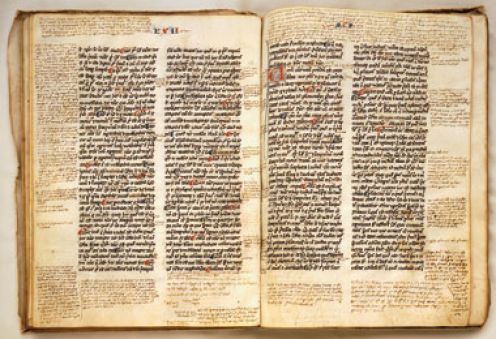
Amidst hard-to-ignore societal developments and tendencies that are disheartening (however variously we may identify and diagnose those), I especially love to hear news of events like this massive donation of valuable manuscripts to the University of Pennsylvania. The motives and nature of the gift serve as a reminder that there are still thoughtful collectors like this one: “The overarching reason why I collect,” Larry Schoenberg reflected, “is the opportunity it affords me to participate in the history of human intellectual activity and the exchange of knowledge.” Wow. Some people really deserve to be rich. Besides bearing testimony to some timeless questions in music, art, science, mathematics, and technology, these manuscripts offer the chance to contemplate in one room “the scope of pre-modern knowledge of the physical world in the Christian, Jewish, and Muslim traditions” — a concern that could hardly be more timely in its potential to contribute to much-needed mutual understanding.
The gift also shows how forward-thinking some careful accumulators can be: “A principal reason behind the Schoenbergs’ decision to donate their collection to Penn was the Libraries’ reputation for providing digital access to rare materials and for supporting the hands-on use of primary sources in research and teaching.” This is far from being mutual back-scratching by remnants of some musty antiquarianism. These kinds of intelligent gifts are investments in a future that we may hope will come.
The Pressure is Off — Till Next Time
April 30, 2011

That screen that divides the Abbey just beyond the choir stalls has the organ console on top of it.
One of the organists who played at yesterday’s wedding tells us what his life is like.

Sensing a Change
April 12, 2011
Paul Valéry once said that, when we look at the sea where it seems to join the sky, we’d think it was all vertical if we hadn’t learned otherwise. Ever since I heard that, I’ve been able to see it that way. It seems that I needed permission to see it as my eye would have naturally told me it was. In one of her novels, Patricia Highsmith has a character step into the square in front of St. Mark’s in Venice in the early morning while the city is quiet. He is struck by the impression that a space so figuratively resonant seems to have its own sound even when it is acoustically silent. We are taught what reactions we are supposed to have to various stimuli and, unless something happens to shake us out of our expectation, we are likely to obey that teaching.
A phenomenon is supposed to have a certain effect on us — and not supposed to have others. In my own experience, there are two coequal ways for the past to be relived unexpectedly and most vividly. One, unsurprisingly, is musical reminiscence. A melody, or even a distinctive spacing of a chord or a timbre, can take me back to some past experience as only one other thing can: smell. Two days ago I encountered an odor that took me back to the age of five or six, and I’m absolutely certain that I have not smelled it since. I can date the odor that easily because it was one that I associate with, and only with, a warmer for baby bottles that my mother used when my younger brother was an infant. The specificity of the recollection was stunning, and it was stunning and exact in precisely the same way that musical memories can transport.
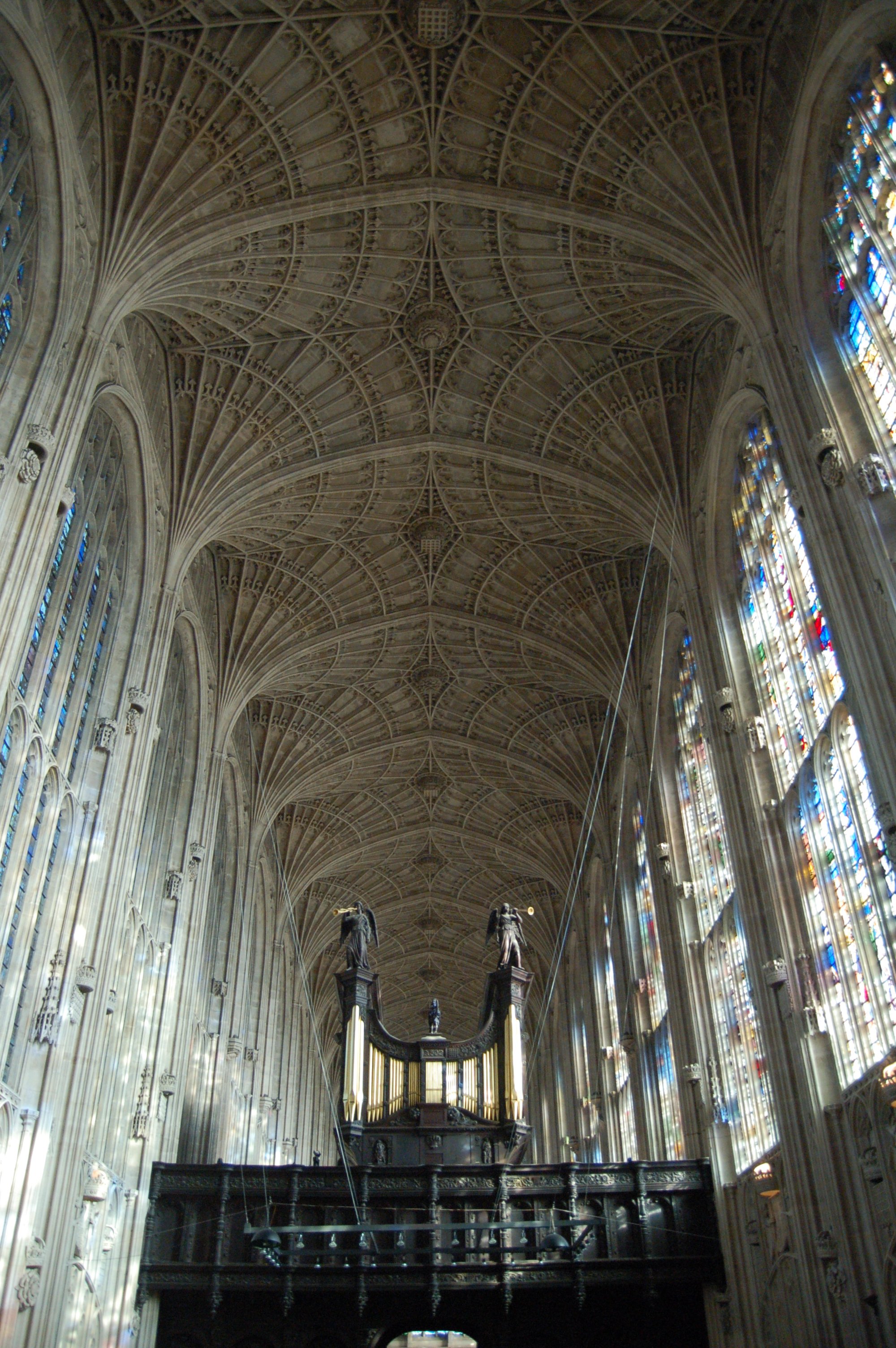
The ancient Greeks (along with other cultures) were convinced that music can have not only psychological effects, but physiological ones as well. Many of us will recall musical thrills that, quite apart from any intentional therapeutic exercise of the kind envisaged by the Greeks, seemed to effect a chemical change in our bodies. I can recall one other kind of esthetic experience that powerful, and it is a visual one that I have known through architecture. It is of course a commonplace to attribute this kind of reaction to the grander manifestations of nature, but I acknowledge with mixed feelings that I have had it most memorably from the man-made. As I recall my first youthful entry into the chapel of King’s College, Cambridge, I’m certain that my body chemistry was affected. I can almost bring back the feeling in my imagination. Queen Elizabeth I is said to have broken into tears when she first saw that interior. People assumed it was because she noted the intertwined initials of her parents in the tracery of the vaulting, but I wonder if she just may have had the same thrill that I experienced four hundred years later.
The only other place that I am conscious of as having produced that effect on me is Jefferson’s famous quadrangle at the University of Virginia, the effects of which no photograph can approximate. I am convinced that it induces mental health in the susceptible.
Facile claims of equivalences between arts and between senses are not worth much. Being attentive to one’s own experiences has its value, though. Valéry’s sanctioning of a counter-intellectual view of the horizon or a willingness to experience music, smell, and sights promiscuously — a simple willingness to let worthwhile greatness take us where it will — is a treasure of inestimable value.
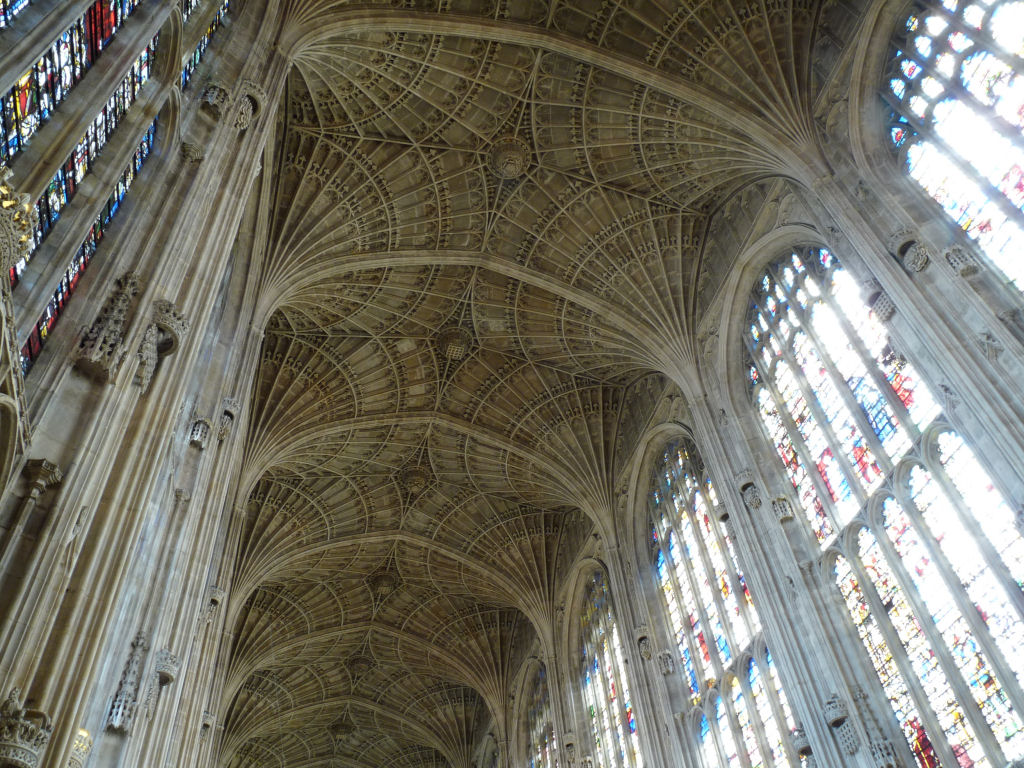
UPDATE: Speaking of powerful architecture, I’ve been pleased to have this blog pointed out to me.
Happy Birthday, Béla Bártok
March 25, 2011

See an excellent online exhibition from the Hungarian Ministry of Foreign Affairs.
Priceless but with a Big Price Tag
March 22, 2011
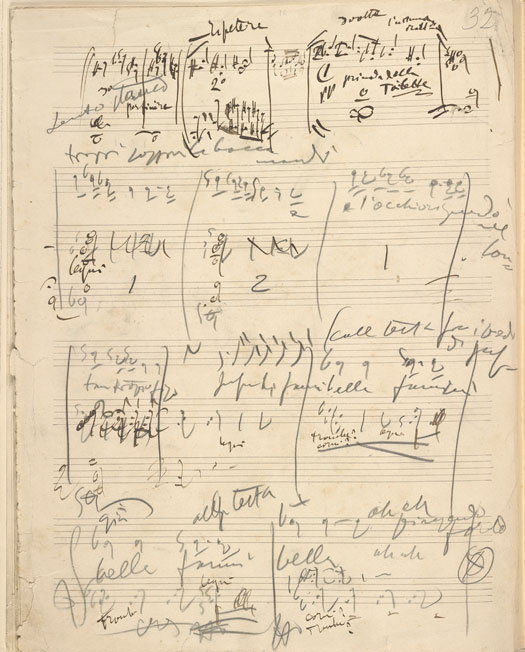
A sketch for Act II of MADAME BUTTERFLY
Serious news about the threatened loss by sale of a substantial music-manuscript collection at the Morgan Library. Given the library’s ventures into an online presence for some of these documents, the loss might be borne by more than researchers physically present in their reading room.
Seated at the Keyboard
March 20, 2011
What to do when you play a historic keyboard instrument but, aside from direct music-making, have some untraditional requirements for sitting — not everyone choosing to stand to play, as we see in Vermeer? The ideal historically-informed way would of course be to acquire a chair in the period and style of the instrument. But aside from certain differences in the way we sit at the keyboard nowadays (18th-century male players having extended their legs to the side to show the curve of the calves to best advantage, for example — something that for several reasons almost never occurs to me), I had comparatively prosaic needs: I sit quite low to play, but the cembalo in question is played six times a week by a small child. Thus it needs to be easily adjustable. One of the elaborate contraptions used for modern pianos seemed somehow inappropriate — not to mention expensive overkill. Today I hit on a solution that I’m very happy with: one of those stools that medical and dental practitioners use. It is practical, comfortable, unassuming, and inexpensive.

 RogerEvansOnline.com