Triduum Sacrum
April 7, 2012
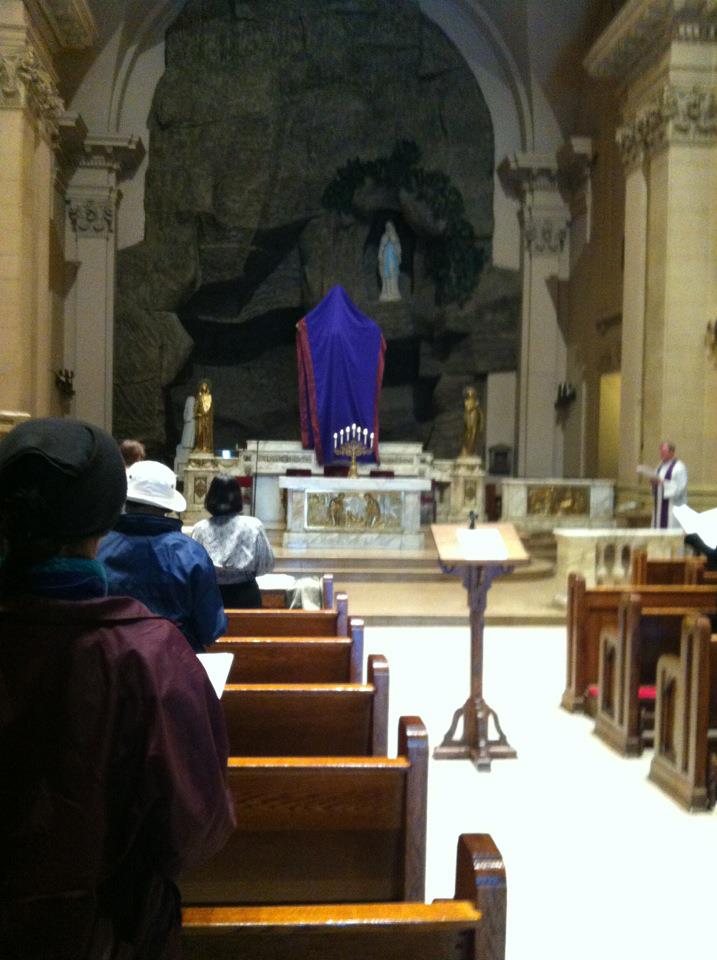
Like many others, I’ve been completely consumed with doing music for the great liturgies of the Three Days. Pictured above, from this morning, is the third Tenebrae liturgy, at the Church of Notre Dame here in the city. Tonight comes the climax, with the Easter Vigil in the Holy Night.
Passionate Group Improvisation
April 4, 2012

The main takeaway I get from this performance is that this quite effective presentation of the Passion is musically as good as the compositions of quite a few highly popular or award-winning “classical” composers. If a choir of good professional singers can improvise this kind of music, what does it say about the guys who are lauded for putting on long faces and composing it?
On the Road
March 28, 2012
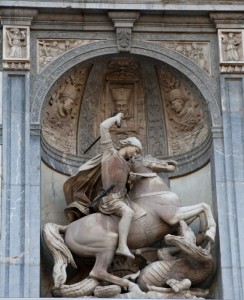
Sculpture of St. George on the façade of the Palace.
There has been a bit of a break in blogging, since I’m in Barcelona with all the non-cyber delights that the city involves. Last night was the formal commemoration of the Montsalvatge centenary by the government of Catalonia. It’s terribly impressive to an American to see such official honors heaped onto a musician — including by the “Senyor President,” “Senyora Presidenta del Parlament,” government ministers, and the musical dignitaries of the place. Your humble American minstrel was stunned, first, to be invited by the President at all — addressed as “El Biògraf de Xavier Montsalvatge en anglès,” then to be met at the gate by a functionary who called me by name before I could timorously identify myself, then to be shown to a seat with leaders of the rich cultural life here. Imagine.
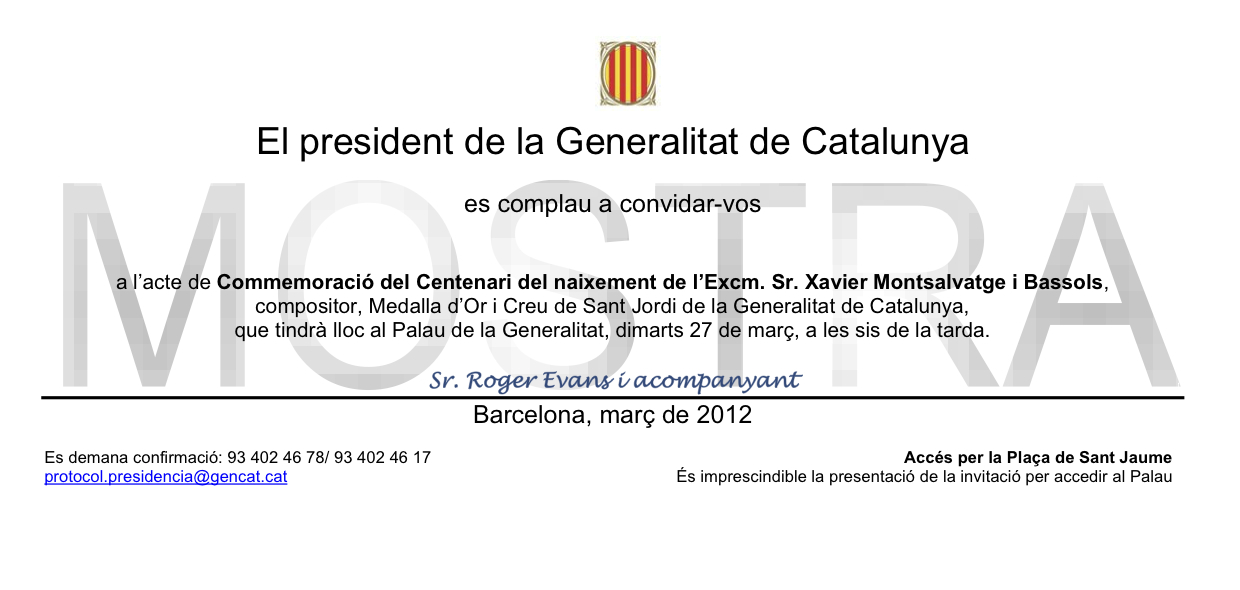
The panegyrics offered by the country’s highest authorities were worthy of a composer who, in life, had won his homeland’s highest honors, the Gold Medal of the Generalitat and the Cross of St. George, as loftily named on the invitation.
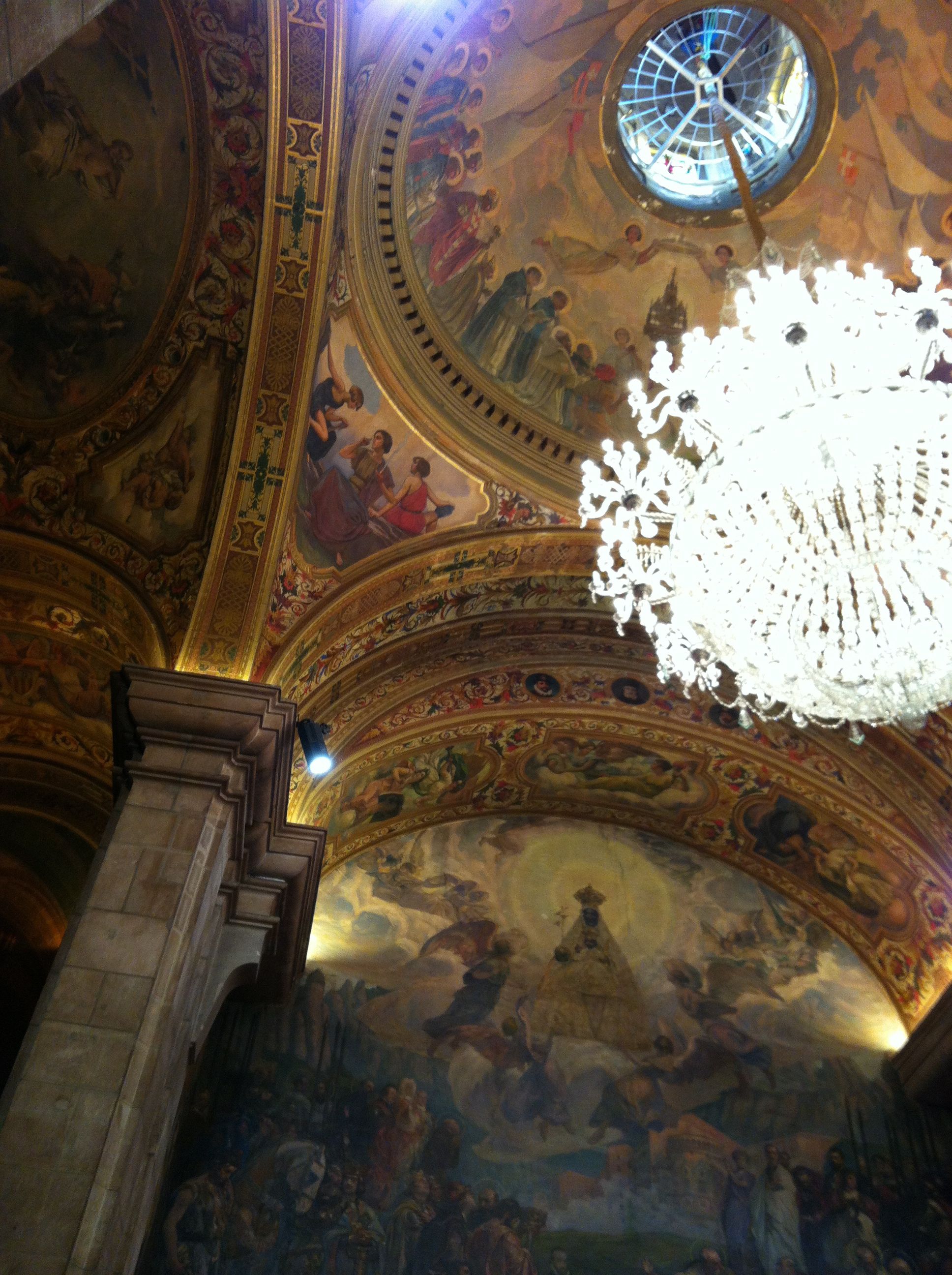
And nothing could have made a grander setting than the palace’s Sala de Sant Jordi:
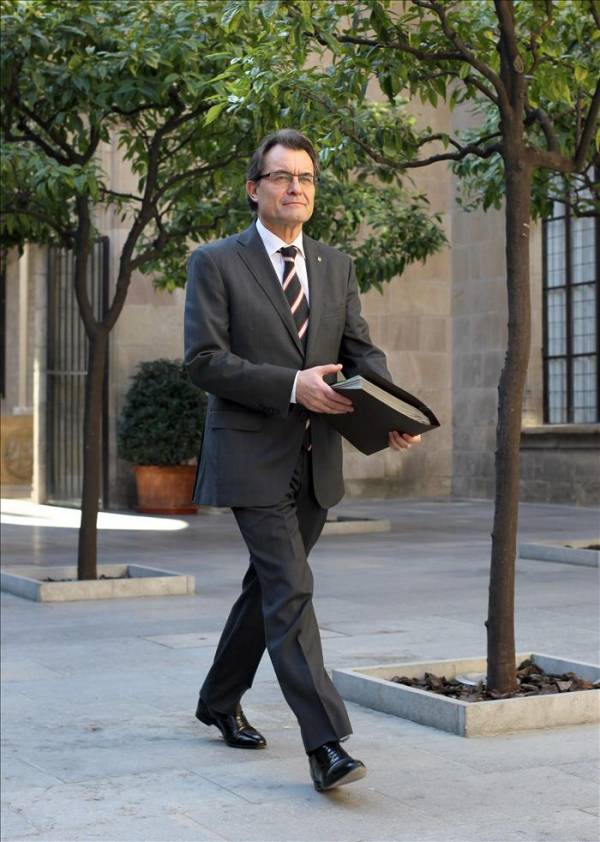
President Mas was eloquent:
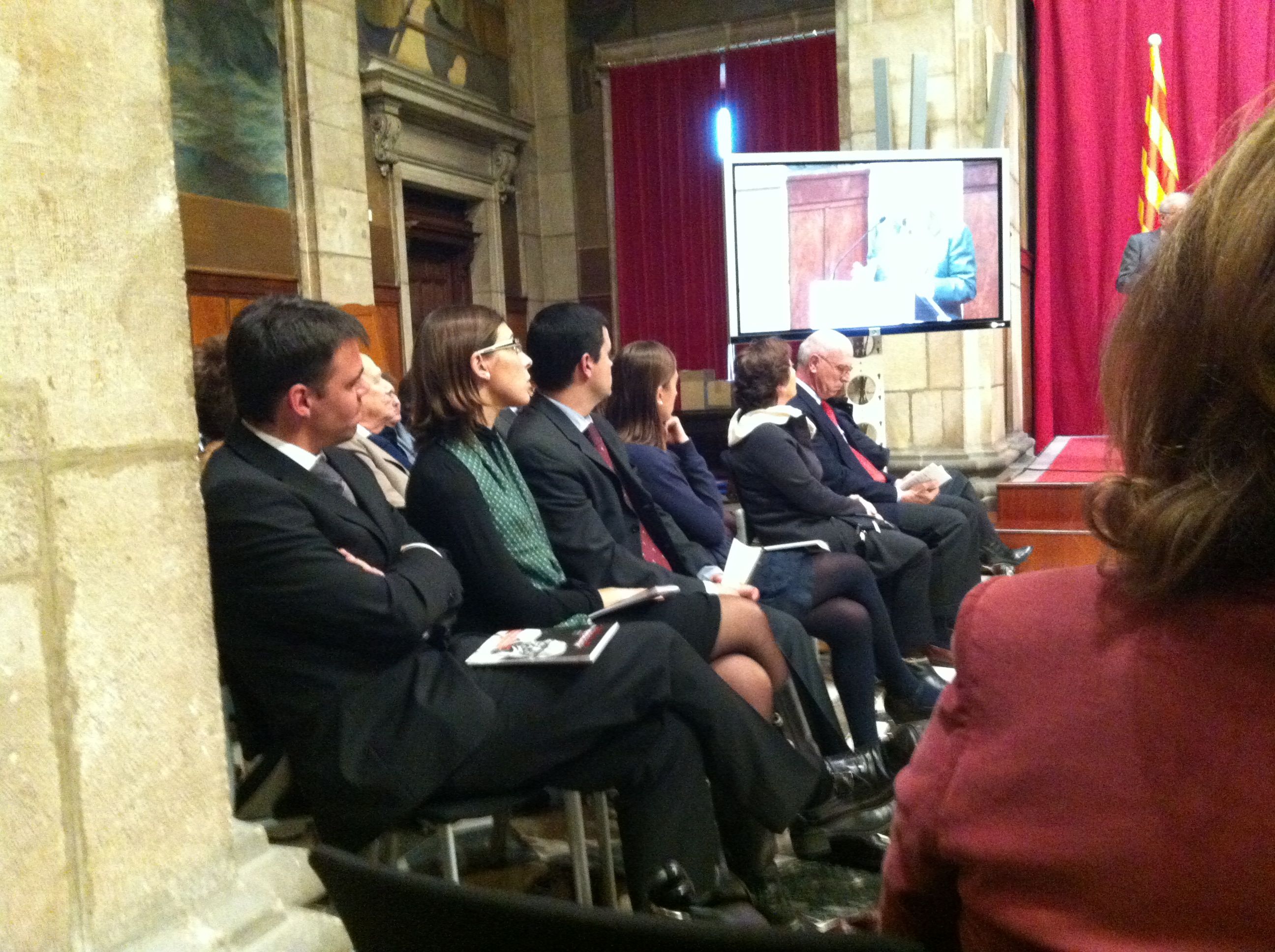
The Montsalvatge family were suitably delighted by the ceremonies:
And we feasted into the night, fittingly, on Xavier Montsalvatge’s favorite dish, escargots. Yes!

Bad but Great?
March 22, 2012

Was the most influential writer in 19th-century America a bad writer? Or was he a great writer? Or was he, against all odds, both? An extraordinary article puts forward the claim that he was. Whether or not you agree with the writer’s conclusion, his way of getting there is thought-provoking. And it certainly provoked a lot of interesting correspondence, much of it quite vehement. I kept thinking about how this kind of discussion could apply to music criticism in an enlightening way.
That article and the response to it illustrate some of the assertions in an article that appeared yesterday in The Guardian. In it an art critic says the time for pronouncements from people of his profession has come and gone. “Criticism today is not about delivering truths from on high, but about striking a spark that lights a debate,” he says. Certainly the first article above (about Edgar Allan Poe, if you didn’t guess) fulfils the latter part of that decription.
Crowdsourcing music criticism? It ought to happen; it’s bound to happen; it’s happening. So far, we have to sift through a lot of silt to find the gold nuggets, but that will sort itself out over time. And, in 75 years or so, if that hasn’t happened, remind me that I owe you a dinner.
Organized
March 21, 2012
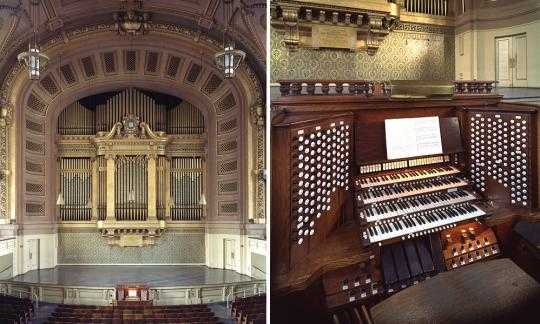
Some of the technology inside the Newberry Memorial Organ as I’d never seen it before:
Ira Glass on Developing Technique for Creativity
March 19, 2012
Just Got the First Copy!
March 16, 2012

From the back of the book:
At the age of 24, already a rising star of Barcelona’s musical life, Xavier Montsalvatge’s composing was interrupted by the Spanish Civil War. When the war ended he quickly achieved critical and popular success in works that merged an attractive polytonality with rhythms and melodies derived from the Catalan experience in Cuba. But the spread of his music was seriously impeded by the policies of Francisco Franco’s decades-long dictatorship, which privileged a uniform cultural viewpoint throughout Spain. The regime persecuted representatives of Montsalvatge’s Catalan culture, forbidding many of its millennium-old manifestations and endeavoring to stamp out its very language. Despite this, Montsalvatge became one of Barcelona’s most influential cultural forces through his music and his music journalism. Now, a century after his birth and a decade after his death, as increasing worldwide attention is being focused on the large and attractive Montsalvatge catalogue, this first biography from outside Montsalvatge’s home circle introduces the man, his culture, and the breadth of his compositions to an international audience. It is a compelling story from one of the least-illuminated corners of 20th-century history.

If you should want a copy of your very own, they can be had here.
Laughing at “Copyright Math”
March 16, 2012
Ken Fisher’s thoughts on the talk here.
 RogerEvansOnline.com