RIP Richard Rephann.
February 6, 2015
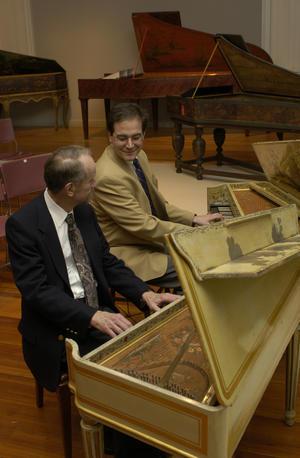
Richard Rephann with a student. Photo by Harold Shapiro
Just last night I made a mental note to check on my old teacher and his health, and now I stumble on this sad news. His lessons were marked by plain-speaking (I remember that I once said that I had a technical issue that I wanted to work out in a piece, and his comment was: “At your age [I was 21], any technical issue is a matter of geriatrics”); but he was also remarkably generous to me in ways that mattered, and when I received my degree I was stunned at the voluntary offers of professional help and unexpected recommendations that he gave me.
Roger Evans, la vida d’un músic de clavicèmbal apassionat per l’obra de Xavier Montsalvatge
January 13, 2015

A radio interview (in Catalan).
Know Thyself — If Thou Darest!
November 23, 2014
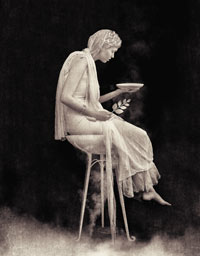
The Delphic advice to “know thyself” should have a modern footnote saying that one way of doing that is to see oneself on television. I was on a talk show on Thursday and had the modified rapture of seeing myself as others see me. It’s always a surprise. For example, I had no idea that I ever would start a sentence with “Mind you . . .”
http://www.elpuntavui.tv/video.html?view=video&video_id=112411970
Another of this Year’s Centenaries
November 7, 2012
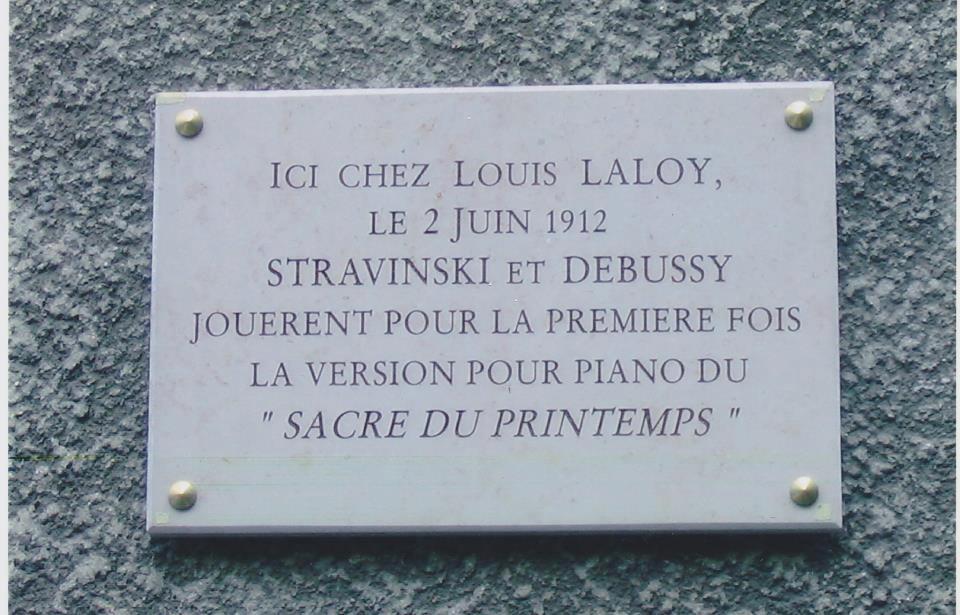
Photo courtesy Paavo Järvi
Can Play Make Us Play Better?
August 9, 2012

“Play hard; work hard.” We’ve all heard it many times. Do we take it to heart? Should we?
In his study of talented young musicians in Berlin, K Anders Ericsson asked what separated the outstanding soloists from those who were merely good. The difference was not – as is often misquoted – that the best players practised more. Instead, they practised intensely and then allowed themselves more time to relax and recoup.
The lesser players spread their work throughout the day, never escaping a sense of stress and anxiety. The elite players, in contrast, consolidated their work into two well-defined periods, one in the morning and one in the afternoon. Either side of these peaks of concentration, the best players enjoyed life: they slept more during the daytime and spent more time having fun away from music. Their lives were simultaneously more relaxed and more productive. What some people call idleness is often the best investment.
The idea that being good at something demands harried, exhausted martyrdom is a relatively new idea. “Only in recent history,” as Nassim Nicholas Taleb puts it, “has ‘working hard’ signalled pride rather than shame for lack of talent, finesse and, mostly, sprezzatura.” If we really want to be good at something, we should stop wasting time exhausting ourselves.
See the whole argument here.
Instrument at One With Nature
June 11, 2012
As I tuned this morning, the rising sun shone through the jacks in a most immediate way:
On the Road
March 28, 2012
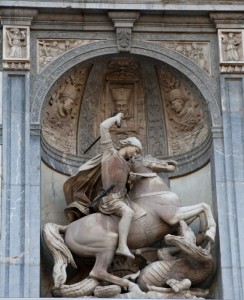
Sculpture of St. George on the façade of the Palace.
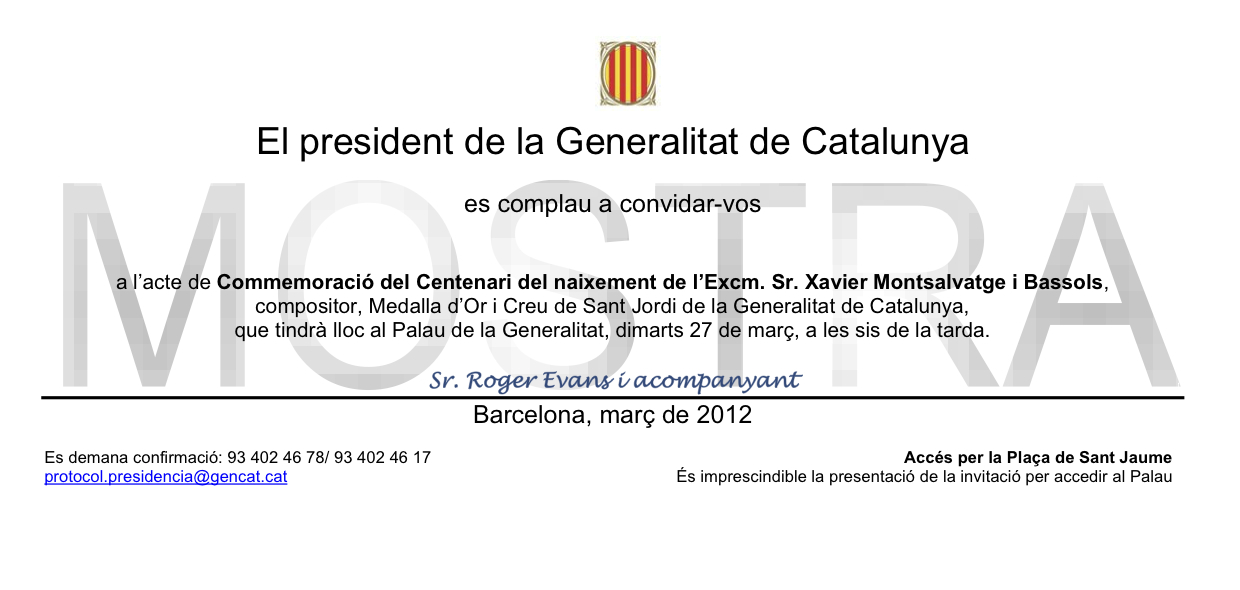
There has been a bit of a break in blogging, since I’m in Barcelona with all the non-cyber delights that the city involves. Last night was the formal commemoration of the Montsalvatge centenary by the government of Catalonia. It’s terribly impressive to an American to see such official honors heaped onto a musician — including by the “Senyor President,” “Senyora Presidenta del Parlament,” government ministers, and the musical dignitaries of the place. Your humble American minstrel was stunned, first, to be invited by the President at all — addressed as “El Biògraf de Xavier Montsalvatge en anglès,” then to be met at the gate by a functionary who called me by name before I could timorously identify myself, then to be shown to a seat with leaders of the rich cultural life here. Imagine.
The panegyrics offered by the country’s highest authorities were worthy of a composer who, in life, had won his homeland’s highest honors, the Gold Medal of the Generalitat and the Cross of St. George, as loftily named on the invitation.
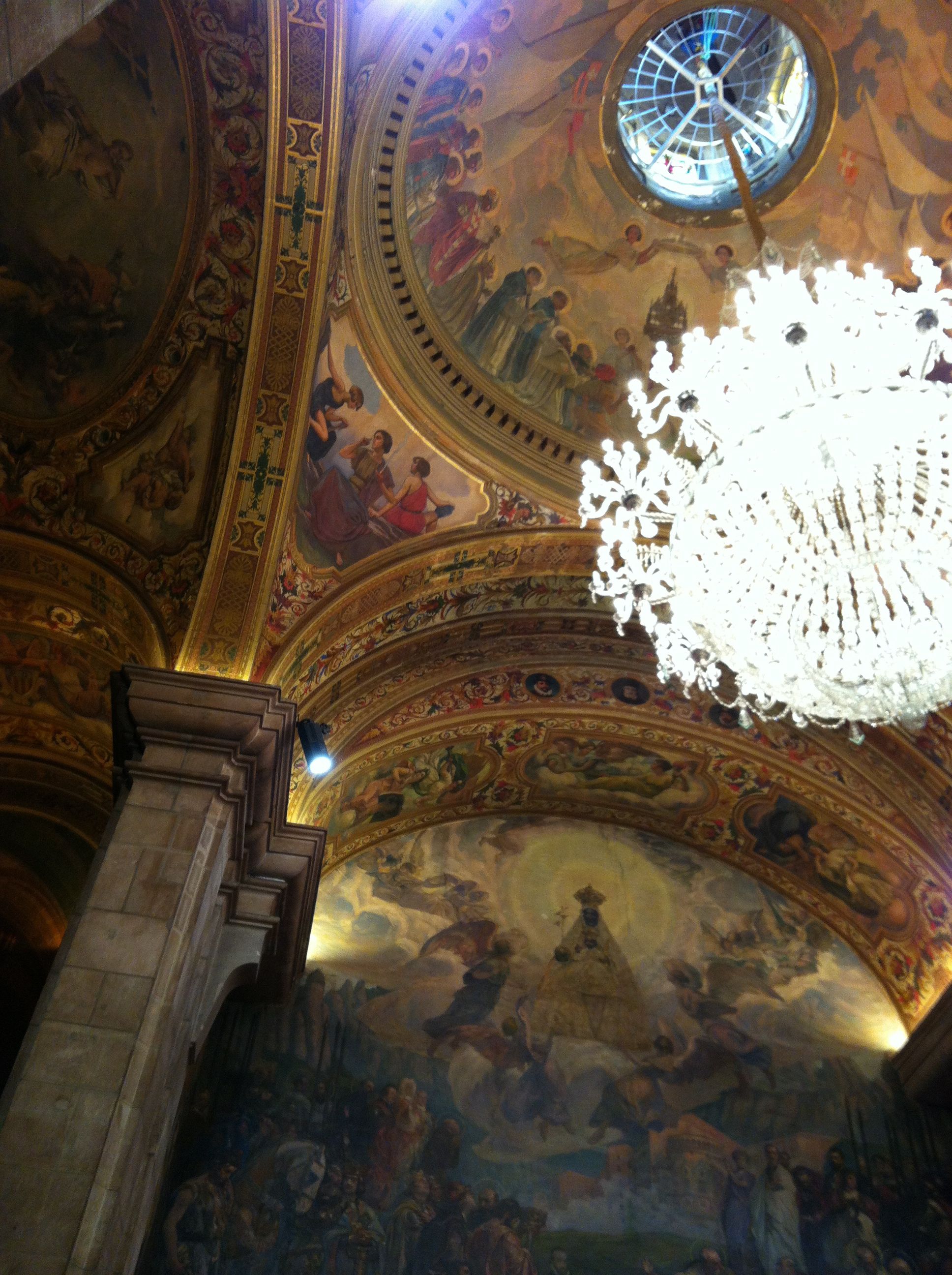
And nothing could have made a grander setting than the palace’s Sala de Sant Jordi:
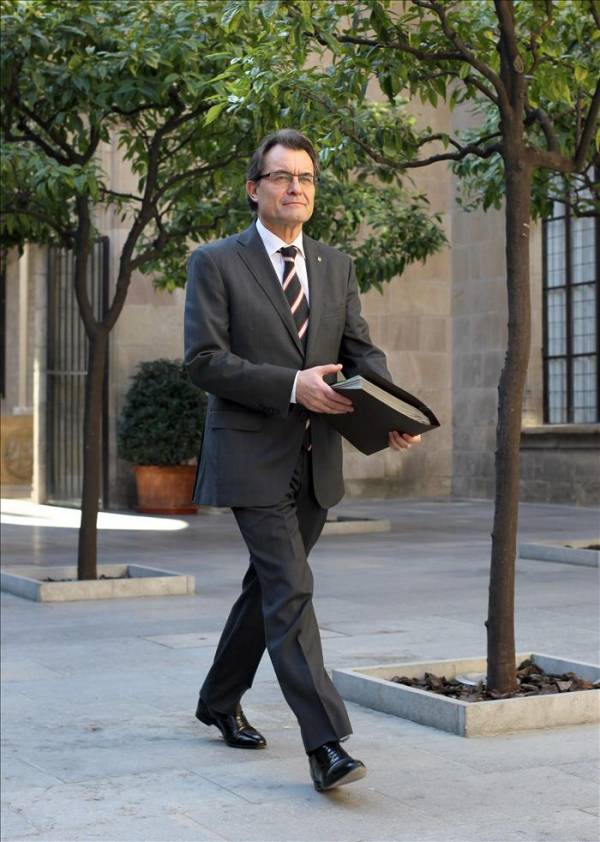
President Mas was eloquent:
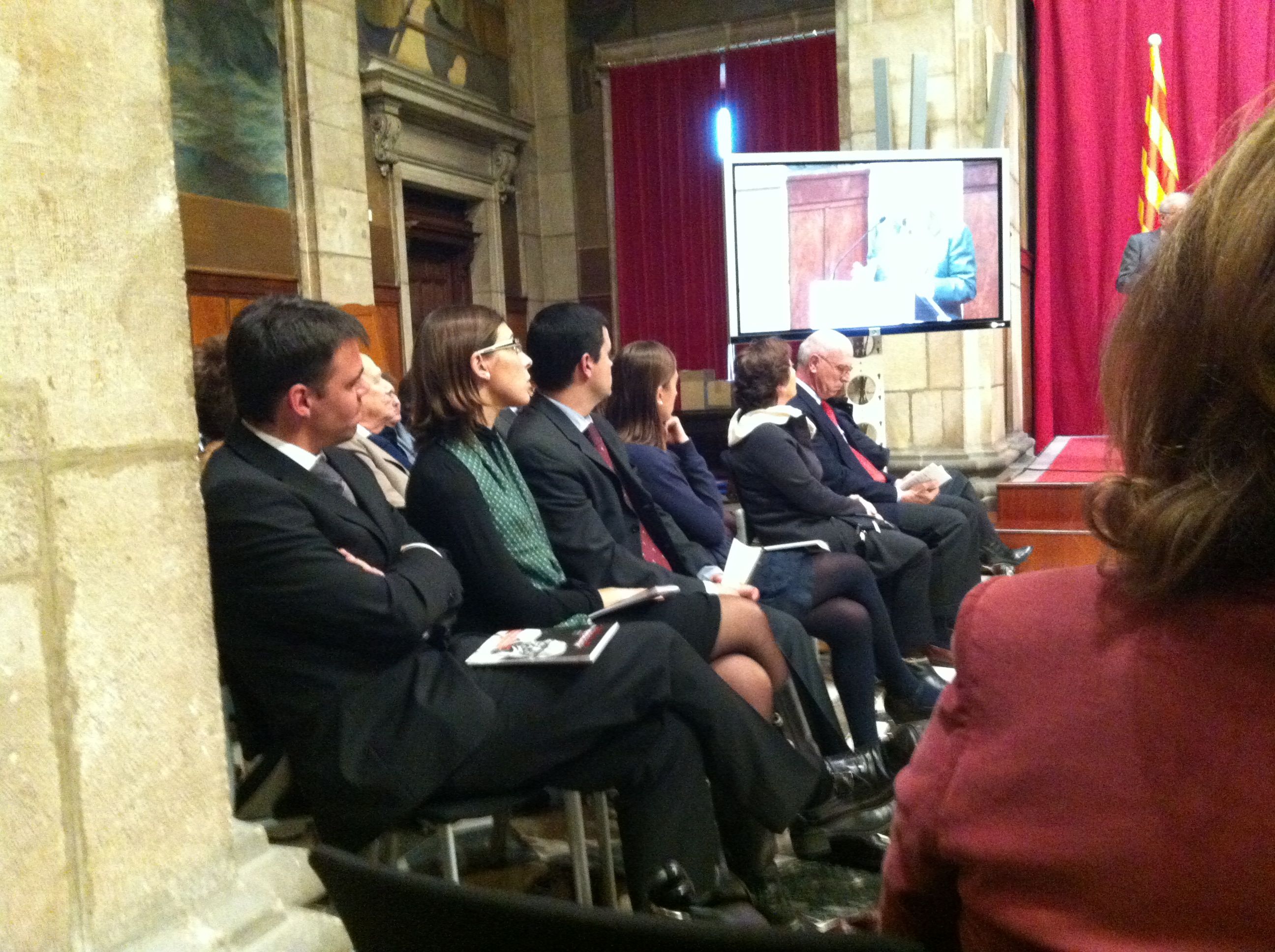
The Montsalvatge family were suitably delighted by the ceremonies:
And we feasted into the night, fittingly, on Xavier Montsalvatge’s favorite dish, escargots. Yes!

Art Power
February 2, 2012

We sometimes talk quite glibly about the arts “taking us out of ourselves.” This performance report from the Seattle Children’s Theater reminds us of the actual potential at hand.
Tip of the hat to Ryan J. Davis
 RogerEvansOnline.com