Bach: Suffer the Children
April 28, 2016

“Don’t Let Those People In”
March 18, 2016

At the moment, Europe is preoccupied with—if not convulsed by—the issue of massive migration of peoples. Much of the debate stems from a possibility that many of the incoming masses may not share something constantly referred to as European values.
Leaving aside a possible discussion of the extent to which Europe has been busy discarding previously held European values for quite some time (for example, even denying the Christian roots of Europe to the extent that the basic documents of the European Union, against the protests of many, pointedly omit even a neutral mention of them), it is also relevant to recall that far more massive invasion and destruction than is predicted by even the most alarmist commentators took place when Europe invaded the vast continents that Europe has named “the Americas.”
And talk about violating the established values of a society!
A new BBC discussion by renowned experts on the Maya civilization, so largely and purposely destroyed by the Spanish invaders, is estimated to have reduced the population of this very advanced society by ninety percent in a comparatively short time. Ninety percent of the people wiped out. This puts xenophobic whining about letting Muslims back into Spain in quite a different light. And a concomitant of the destruction of humans was a disregard for the many things that Europe could have learned from, for example, their advanced systems of land-use and ecologically wholesome food-production that would mark great progress even today if they could be imitated. The incorporation of vast green spaces into massive city layouts that they accomplished is stunningly sophisticated.
My own comparative lack of interest in and sympathy with Maya civilization (even when I visited one of their former strongholds on the Yucatan Peninsula) had to do with my visceral horror at human sacrifice. This turns out to have been an invented libel, according to advanced academic scholarship. And the idea that the Mayan languages so much admired by scholars were stamped out by Spanish is absurd when we learn that there are still ten million speakers of the various Maya languages surviving (coincidentally about the same number of people who claim to understand the Catalan language, which persistent Spanish violence has also not had the power to stamp out).
I highly recommend this enlightening (and even entertaining) discussion from BBC Radio Four.
An Eventful Week in Catalonia
February 19, 2016
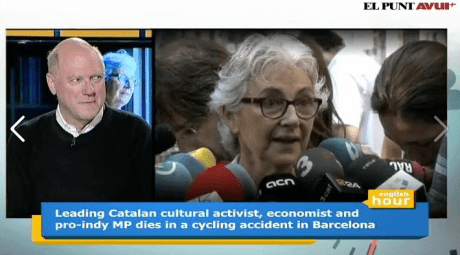
Matthew Tree led an excellent discussion yesterday. All four of us were from different national origins, and different backgrounds sometimes clearly and sometimes subtly enrich such conversations:
http://www.elpuntavui.tv/video.html?view=video&video_id=155859614
Epiphany in Russia
January 13, 2016
Begun in 1882, Completion is Now in Sight
October 27, 2015

Now begins the construction of the central tower (La Torre de Jesús) of the Basilica of the Sagrada Família. It will make that “Expiatory Temple” the tallest building in Barcelona.
Nobody Knows
October 27, 2015
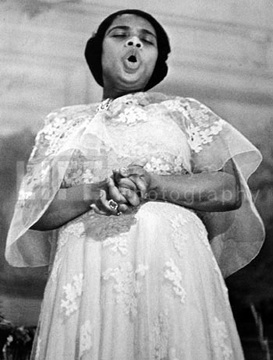
Marian Anderson (photo by Alfred Eisenstaedt )
In his biographical papers published in the last decade of the twentieth century, Xavier Montsalvatge has a chapter called “Barcelona, en els feliços (per a alguns) anys vint” or “Barcelona, in the happy (for some) 1920s.” In it, he lists many of the world’s leading musicians who appeared in Barcelona as a matter of course before the ravages of the Spanish Civil War and the isolation of the Franco dictatorship. He remembers Ysaye, Rachmaninov, Prokofiev, Kreisler, Heifetz, and the famous conjunction of Thibaud, Cortot, and Casals, who performed both as soloists and in their equally renowned trio.
He also singles out the “deeply moving beauty of the sublime Marian Anderson” who introduced Catalans to Negro Spirituals, sung in concert. Here is a Victor recording of “Nobody Knows de Troubles I See” from that very period:
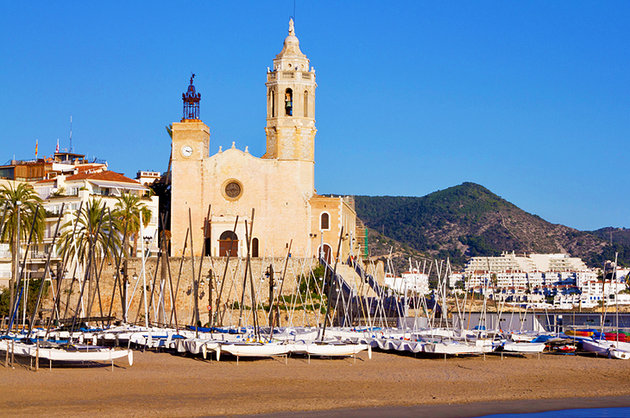
Montsalvatge adds that, after so thrilling an introduction, those same spirituals had been debased by a “desmesurada i irregular diffusió” by the 1990s. Their very popularity had caused them to circulate in ways untrue to their original meaning. I can testify that this continues in Sitges where, in the beauty of our iconic parish church, the tune of the sorrowful “Nobody Knows de Troubles I See” is sometimes sung at the end of Communion to the words, “Vos sou, Senyor, la llum del meu cor” (You are, Lord, the light of my heart), of course completely overthrowing the meaning of the lament! I’m sure that we Americans have likewise inappropriately appropriated the artistic treasures of other cultures very often, but it’s very difficult for me to hear that mournful melody of a persecuted race as a thanksgiving after Communion!
Independència
October 4, 2015

A discussion in English of last Sunday’s election of a pro-independence Catalan parliament, at this link.
Interview in L’ECO DE SITGES — Sitges (Barcelona), Catalonia
March 11, 2015

 RogerEvansOnline.com