The Long Arm of the Met: Beyond Opera
February 8, 2008
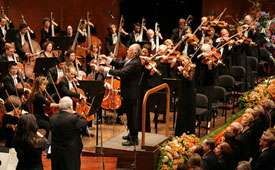 It was striking but unsurprising when the Metropolitan Opera’s success with high-definition broadcasts into movie theaters set off related developments in opera houses internationally. But an e-mail survey that came out yesterday from the New York Philharmonic shows that America’s oldest orchestra is also interested in joining the fun. The survey contained a long and detailed series of questions, and I’m wondering how many people were, like me, curious enough to see it through to the end. It was an unusually frank questionnaire, leaving little doubt as to its objects.
Read the rest of this entry »
Pergolesi in Two Guises
February 6, 2008
See yesterday’s post.
Excerpt from the Stabat Mater: Eia, Mater, fons amoris
Sung by René Jacobs
And when Pergolesi moved from church to opera house, the musical vocabulary remained the same.
Excerpt from the first aria of La serva padrona: Aspettare e non venire
Sung by Donato di Stefano
Speaking Truth to Power
February 4, 2008
 Poor Margaret Truman. Poor Paul Hume. Her concert career was pretty much finished off by her father’s intemperate letter to a frank critic, and Paul Hume’s many years of distinction at The Washington Post are often most-remembered for President Truman’s letter.
The letter is better known than the review, of course; reading it, though, it’s still astonishing that such a communication was sent on White House stationery:
Mr. Hume: I’ve just read your lousy review of Margaret’s concert. I’ve come to the conclusion that you are an “eight ulcer man on four ulcer pay.”
It seems to me that you are a frustrated old man who wishes he could have been successful. When you write such poppy-cock as was in the back section of the paper you work for it shows conclusively that you’re off the beam and at least four of your ulcers are at work.
Some day I hope to meet you. When that happens you’ll need to a new nose, a lot of beefsteak for black eyes, and perhaps a supporter below!
Pegler, a gutter snipe, is a gentleman alongside you. I hope you’ll accept that statement as a worse insult than a reflection on your ancestry.
The review itself inevitably makes for less diverting reading, but the salient points were:
…Miss Truman cannot sing very well…
…There are few moments during her recital when one can relax and feel confident that she will make her goal, which is to end the song…
…She communicates almost nothing of the music she presents… And yet still the public goes and pays the same price it would for the world’s finest singers…
…as long as Miss Truman sings as she has for three years, and does today, we seem to have no recourse unless it is to omit comment on her programs altogether.
For the sociology of music, though, this event marked important principles. While it is clearly indecorous for the President to promise assault upon a citizen, it it refreshing to realize that he meant to do so as a private citizen without any of the abuse of office that can sometimes occur. However much it may have embarrassed the gentlemanly Paul Hume to be associated with such a squalid situation, he can’t really have expected violence against his person.
And Harry Truman’s knowledge of the public was shrewd. He predicted that mail would be eighty percent on his side in the matter. It in fact exceeded that. The spectacle of a powerful man descending from his height in defense of a loved child edified parents everywhere, as he knew it would.
This should be remembered in any attempt to pretend that reviews of performances (or our reactions to them) are, or can be, completely objective.
Every time I see Margaret Truman’s quite lovely portrait on the wall of one of those upper corridors at Carnegie Hall, I think of the fact that she was the great loser in the famous exchange. In the obituaries for the accomplished author and broadcaster Margaret Truman Daniel last week, every one of them put great emphasis on Hume’s documentation of her sorry singing. She had her father to thank for that, but then she never gave any sign that she regretted his excess of protective love.
The fact that a critic could write so honestly, the President-father could react so excessively, and nothing was injured but an already ill-starred career is a great tribute to free societies.
Viardot
February 3, 2008
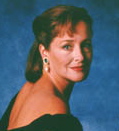 Having mentioned rôles that the great Pauline Viardot (1821–1910) played in Chopin’s story, it seems worthwhile to notice that Frederica von Stade (and who worthier?) has lately been singing, either with others or alone, compositions by Viardot as she performs around the world. London’s Wigmore Hall and the Théâtre Musical de Paris have already heard such performances, Opera Rara has issued a recording, and on March 20 in San Francisco, Von Stade will be doing a “theatrical concert” (“Pauline Viardot and Friends”) with Vladimir Chernov and Melody Moore, narrated by Marilyn Horne.
Cecilia Bartoli has created something of a sensation recently with her disc of music associated with Viardot’s renowned sister Maria Malibran, but Viardot lived much longer and managed to keep abreast of all the areas of musical life of her long day. The career began with famous family performances. Her father, who became the leading singing teacher of the time, had created the rôle of Almaviva in Rossini’s Barbiere di Siviglia. The family came to New York and presented the first performances of Italian opera ever heard in the city. They managed to put on a Barbiere in which family members took all the parts, and they gave the American premiere of Don Giovanni in the presence of its librettist, Da Ponte.
But when you consider that Pauline, who studied piano with Liszt, went from direct links with Mozart to being the mother of Fauré’s fiancée and knowing Debussy and Boulanger, you get some idea of her range. She maintained an eminent salon in Paris, for which Cavaillé-Col built an organ that was regularly played by Gounod and Saint-Saëns, and she lived to pass the torch to the American Princesse de Polignac, who took over patronage of Fauré and moved on to Stravinsky, Satie, Milhaud, and Poulenc.
After so many years of performing, mentoring, and generally living the vie musciale, Viardot composed her last operetta at the age of 84 (based on a version of the Cinderella tale). Those disposed to undervalue the importance of women in music history would do well to contemplate this brilliant figure who had one of the most fulfilled musical careers of all time.
New York im Licht
January 31, 2008

 When Carnegie Hall presented its marvelous “Berlin in Lights” festival this season, lots of us were thrilled by many of the varied offerings and by the concept itself. Perhaps nothing about the series was more effective than Carnegie Hall’s going out into the field, as it were, instead of just waiting for the folks to come to it. (This is of course paradoxical for a producing organization that owes its very existence to the great Hall itself, but so be it.) I’ll never forget the production of The Rite of Spring at the United Palace Theater in Washington Heights, using uptown public-school children as dancers and the very Berlin Philharmonic as the pit band. It raised many possibilities, in the imagination, of what Carnegie Hall might do to match the excitement of that festival in the service of other cultural milieux.
It’s doubtful that they could have come up with a better idea along those lines than the one that was announced this week for next season, in which Jessye Norman will curate a wide-ranging series called “Honor! A Celebration of the African-American Cultural Legacy.” It’s a great idea, and Ms. Norman just may be exactly the right person to put it together. A daughter of the deep South, long a prominent resident of New York, she has achieved an intensively international career in which she has succeeded in interpreting artifacts of many cultures to many cultures; she’s a woman with an always-astonishing sense of style and of theater. Could Carnegie Hall have done better? (I’m trying to picture the meeting at which the idea first came up. Did everyone’s eyes light up as mine did on first hearing of it?) Jessye Norman will be facilitating the presentation of rich material that will be at least as foreign to much of its intended audience as the Weimar-era cabaret music, klezmer bands, or “The Rite of Spring” were to the average American this season.
The Berlin Philharmonic’s Stravinsky project seemed made for its uptown venue, but in fact they had done it first back home in Berlin. Might some of the coming African-American events be as successfully presented in Berlin? We owe them, after all.
“Some Have Entertained Angels Unawares”
January 30, 2008
 I had a recital to prepare in Woolsey Hall at Yale. In those days students were given only very limited access to the pipe organ, one of the most famous in the world, in that hall — even when we had a performance coming up there. Great planning and discipline, if we were wise, went into how our few hours of access would be spent.
The program included a big Dupré prelude and fugue and what I was assured was the American premiere of a Tournemire organ-mass. I was also to play Hindemith’s Sonata III, using the markings in the composer’s manuscript — preserved in the Yale Music School Library –, including registrations for this very instrument. (I recall that these included Hindemith’s favorite organ stop, the Heckelphone, for the solo of the second movement.)
Thus I was particularly annoyed during my last practice session when there arose one of the organist’s occupational hazards: Someone was lurking at the very edge of my peripheral vision and wouldn’t go away. I know it makes no sense that, while practicing in a vast public building, a performer should be annoyed by the presence of a single auditor, but so it was. And I was far from unusual among my peers for finding it so. The organist’s lore is full of methods for chasing these people off (one of which is by playing the same dull passage over and over till the person leaves in desperation), but all of those expulsion techniques are time-consuming. And time was exactly what I was short of. So my grinning and bearing were called into overdrive when the figure came closer and closer and really seemed to bear down.
I began to feel that a direct confrontation was called for, so I turned and looked the man squarely in the face. Before I could speak, he started asking questions in such a sincerely interested and noticeably intelligent manner, that I found myself answering him with, probably, no evidence of impatience. He wanted to know about the piece, which he was clearly finding to be of some fascination. So I recited for him a brief sort of program note on its composer, Max Reger, on late-Romantic organs and organ music, and on the passacaglia form that the piece involved. Some of this I could tell he already knew, and I slowly began to form a reluctance to go on with my little lecture. This was because, with a mixture of pleasure and horror, it was dawning on me that the person who stood before me, the person I had been trying to chase off, the person I had been on the verge of condescending to, was Edward Kennedy “Duke” Ellington.
The Best is Noise
January 30, 2008
 One of our own got to do his thing on the best kind of national television last night. If you missed Alex Ross on The Colbert Report, you can catch it online.
Some of the good stuff got cut, though.
Two Kinds of Writing (and Reading?)
January 28, 2008
 The day after this Web site began, Publishers Weekly came up with an article on the difference between writing online and writing a book.
 RogerEvansOnline.com