How Does Blogging Fit Into the Social-Media Revolution?
July 26, 2009
 I think Scott Rosenberg gets it about right:
So, while there is no question that the energy that has poured into Facebook and its ilk in the latter part of the 2000s has drawn some of the excitement and media attention that bloggers formerly took for granted, it is also true that the rise of the social networks clarifies exactly what characteristics made blogging last. They are the same traits that once excited its earliest pioneers. A blog lets you raise your voice without asking anyone’s permission, and no one is in a position to tell you to shut up. It is, as the journalism scholar Jay Rosen puts it, “a little First Amendment machine,” an engine of free speech operating powerfully at a fulcrum-point between individual autonomy and the pressures of the group. Blogging uniquely straddles the acts of writing and reading; it can be private and public, solitary and gregarious, in ratios that each practitioner sets for himself. It is hardly the only way to project yourself onto the Web, and today it is no longer the easiest way. But it remains the most interesting way. Nothing else so richly combines the invitation to speak your mind with the opportunity to mix it up with other minds.
Mass Music-Education via T-Shirt
July 22, 2009
Seen today in Trader Joe’s Fourteenth Street:

What next? I think I’ll make one that says:
ISORHYTHM IS ONLY ONE ELEMENT OF ARS NOVA STYLE.
Then on the back of the shirt:
(OF COURSE THE TERM DIDN’T EXIST UNTIL FRIEDRICH LUDWIG INVENTED IT IN 1904.)
At Least It’s Easier to Haul Around Than a Drum Set
July 18, 2009
Scandale!
July 17, 2009
 Good things can come out of bad. After a stunningly dishonest article in the Wall Street Journal in which a non-pianist who had not even attended the Van Cliburn International Competition (though leading the reader to believe he had) dogmatically and viciously contradicted the eminent judges and slandered the talents of the winners (and a fine orchestra and string quartet into the bargain), the commentary thus provoked has been extremely fruitful. Examples of it, from one highly-qualified and well-situated commentator, are here, here, and here.
Some of my own reaction to one of the Gold Medalists is already registered. While the old established print media continue to complain and hang crepe about their declining status and exchequer, one feels impelled to ask one more time: which of the sources here conduces to accurate musico-journalistic reporting and the flourishing of art, the formerly eminent old establishment newspaper or the frisky online blogger? Which could we better do without if we had to choose?
Leonhardt in Autumn
July 15, 2009
 Many today spend their careers trying to figure out, with the help of what documents survive, how music of the past was performed. When this is done for musical reasons and produces artistic results, it is an unmixed blessing. I’ve just come upon an interesting interview with Gustav Leonhardt in which he sounds a striking warning:
And we have to remember that so many of the treatises of the seventeenth and eighteenth centuries were evidently written because the author was angry with what he saw going on around him; he saw people doing things he thought were incorrect and wanted to correct them. With Bach we have a tendency to accept that whatever we know of the circumstances of the acoustics or the number of his performers was his ideal. So therefore the acoustics of St. Thomas’ represented what Bach wanted. We don’t know anything about such matters. He might have hated the acoustics of St. Thomas’, or the fact that the gallery was too high, and so on, just accepting what he had and getting on with the job. We give far to much credibility to the idea that everything a composer met with in his working conditions was what he wanted.
The interview goes on to make provocative points about the rehearsal of chamber music (your ensemble is no good if it requires a lot of talk and rehearsal) and conducting (it’s the easiest thing in music performance, if the highest-paid).
Minority Rites
July 11, 2009
 One of the happiest developments for those of us with interests that inhabit what are called niches is that no niche-interest is too small to get its full due through new media. There seems to be a blog for everything, and communication between people involved with the rarest pursuit can find fellow-enthusiasts somewhere in the world to gratify and stoke that zeal. Marketing has come to see the power of this phenomenon under the label of the “long tail” — out of which fortunes are being made on what would once have been deemed unprofitable minority concerns.
Some of these niches, of course, predate digital media but nevertheless profit from them and the communication they forward. Those interested, for example, in the history of the design, technology, manufacture, preservation, and restoration of pipe organs have long merited their reputation as a particularly hardy lot. The Organ Historical Society was founded in 1956, largely under the influence of the doyenne of organ historians, Barbara Owen, for whom that adjective hardy would constitute a laughable understatement. At the time when the Society was founded, the keenest interest among historians and amateurs was focused on the mechanical-action pipe organs that had predated the innovations involving pneumatic and electrical means, starting in the late 19th century. Their interest was far from being all abstract, for valuable monuments to artistic creativity and technological genius were being destroyed constantly in those days, simply for want of an appreciation for their irreplaceable value — a value often obscured by poor maintenance or the redundancy or altered purpose of the venues that housed them.
Read the rest of this entry »
Yankee Doodle Diva
July 6, 2009
 We have appreciated Joyce DiDonato here before, and the American mezzo-soprano daily extends the artistic celebrity that she deservedly enjoys round the world. But, on her country’s Independence Day, she demonstrated for British audiences physical bravery and performance-heroism that recall Greg Louganis’s return from injury to triumph in the 1988 Olympics.
Joyce DiDonato has provided her own account of the evening here, with followups here.
UPDATES FROM OTHER SOURCES:
Intermezzo
Financial Times
The Telegraph
Live Journal
Prima la Musica
The Independent
Parterre Box
Jacksonian Democracy
June 29, 2009
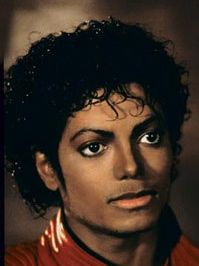 What we like to call, with disdain, the media circus surrounding the death of Michael Jackson was predictable. I’m finding, though, that the reactions of people I know are not so much so.
There has been an intermittently stimulating discussion of the list-serv of the American Musicological Society that appropriately asks the question of how fitting the toolbox of the scholarly musicologist is to the artistic legacy of Michael Jackson. Since modern musicology is conversant with the language of reception of art and the influences, upon it and by it, that are not altogether musical, the subject need not be an embarrassment to dispassionate research. But passionate research is what many will enter into when it comes to a figure whose effect on masses of humanity is not yet completely understood.
One blogger has taken up the task of aggregating serious writing on Michael Jackson — a worthy and particularly 21st-century-media thing to do. It will be interesting to watch how it develops. It can be expected to produce a mixture of scientific content wrapped in a commonplace wrapper and commonplace content disguised by scientific lingo (and I certainly know which I prefer).
 RogerEvansOnline.com