“Submerged in the Wagnerian Esthetic”
August 18, 2010
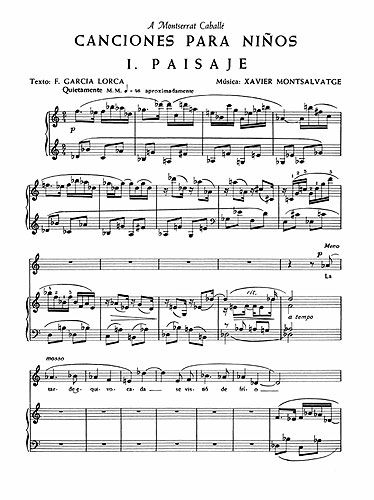
Soon the posts here may return to their former frequency, since I’m in the homestretch of the biography I’m writing. In a way it’s unfortunate that I’m not blogging more, since — thanks to my subject, Xavier Montsalvatge — I’m probably having more interesting thought than usual. Here is Montsalvatge at the age of 80, talking about the difficulty, when he was a young student, of overcoming the overwhelming sway of Wagner’s music in the Barcelona of the 1920s:
Morera was a great harmonist and an even better contrapuntist; but, like nearly all the Catalan musicians of his generation, he composed all his works (very estimable, especially his sardanas and even more his choral works, although it infuriated him that people cited them, since he considered that he had most excelled in the field of opera) literally submerged in the Wagnerian esthetic [literalment submergit en l’estètica wagneriana]. At every moment he proposed for us as an example —as if it was to be treated as the composer’s gospel — the overture to Der Meistersinger, and it goes without saying that, for him, the music of Debussy was a symbol of decadent and bloodless art, that Falla wrote music for refined gypsies, and that some works of his pupils surpassed those of these composers.
This obtuse attitude, though, had a positive aspect. It bespoke, mainly, a blind faith it its ideology — which faith I consider to be in any case better than the agnosticism of the composers of today, which has made us lose fidelity to artistic principles, putting them constantly in question. And he felt for his pupils (me included) an affection that would have made him fight for us if the situation had presented itself. He was a great figure and, despite my not absolutely coinciding with his ideas, I took him for a musician of integrity [un músic d’una sola peça].
Counterpoint and Popular Culture
August 11, 2010
They meet in the most impressive popular way in Stéphane Delplace‘s “Bach Panther” — accompanied by terrific video-production values:
Here’s a disarming interview in which the musician discusses his work:
Stopping to Think What is Happening
August 3, 2010

My friend, and brother in observing media, Ian Huckabee has a perceptive accounting of The Story So Far. He tells of his own family’s progress from a computer the size of a room to the (much more powerful) iPod, noting cultural earthquakes thus enabled.
We will all have our own patterns of how the new means affect our ends, but I find that it’s in my professional life that the effects are most pronounced. The ability to hear of new developments, to communicate new thoughts (and to have them quickly rebutted), to call up old thoughts of millions of others, has revolutionized the volume and directness of sharing musical ideas, whether theoretical or very practical.
It’s easy just to move on automatically to the next idea, the next argument, the next self-aggrandizing or humiliating revelation. But Ian, in his essay, encourages a historical perspective, and he helps us to take our own conscious inventory. We’ll need another one soon.
Lolcats and Casual Music-Making as Gateway Drugs
July 31, 2010

When I hear people complain that their kids are interested in making music but not the “right kind” of music, I think along the lines of Pascal-Emmanuel Gobry’s conclusions here. One thing can definitely lead to another.
Performers and Rude Mobile-Phone Users
July 22, 2010
Tip of the hat to Steve Cohen
A Weekend in the Country
July 19, 2010

The Sunken Garden on the Caramoor estate in Katona, New York
When I couldn’t go to the first performance of Norma at Caramoor, my intention to go to the next one was intensified by the rave reviews it garnered. So, on Friday afternoon, I hopped the “Caramoor Caravan” outside Grand Central Station (three big buses) and got to that heavenly spot in time for Andrew Porter’s predictably satisfying pre-show lecture.
The performance was as the reviews promised, or somewhat better. Not only is Angela Meade the real thing, but Keri Alkema’s Aldagisa was, in its own way, just as remarkable and more than fulfilled the promise of her well-received Donna Anna in last fall’s hit Don Giovanni at the New York City Opera. These young women were not the only virtues — the Orchestra of St. Luke’s sounded rich in the surprisingly fine acoustics of the Venetian Theater — but the well-matched pair are what people will talk about most. The invaluable Will Crutchfield’s next offering in the “Bel Canto at Caramoor” project is already coming next Saturday, and I understand that there are still some tickets. It’s a rare chance to hear Donizetti’s late opera Maria di Rohan.
There were plenty of good reasons to go back up (this time via Metro North, since the Caravan runs only for operas) on Sunday for the Schumann-Chopin celebration, but I admit that the main draw for me was Sasha Cooke. Ever since I first encountered her remarkable art, she has had no rivals in my expectations of the next superstar mezzo-soprano. The last time I heard her was last January in the annual Marilyn Horne festivities at Carnegie Hall. She and her new husband Kelly Markgraf (the Masetto in that same NYCO Don Giovanni) had given an unforgettable duo recital then. While these two are wonderful individual artists, I do hope they will continue to give us such evenings as that one; but yesterday offered Sasha Cooke’s solo majesty in Schumann’s evergreen Frauenliebe und Leben with the eloquent pianist Michael Barrett. Anybody who was in the rapturous audience will tell you that they gave us an experience of that cycle that won’t be forgotten.
But the concert had another memorable highlight as well: the rarely-played Schumann Andante and Variations for Two Pianos, Two Cellos, and Horn was a revelation, even to a big Schumann fan. It of course didn’t hurt to have virtuosos of the level of hornist Stewart Rose, cellists Edward Arron and Alexis Pia Gerlach, and pianists Ken Noda and Michael Barrett. If you don’t know the work, get a recording. But even then you may miss the enchanting spacial effects that Schumann achieves in the subtle interplay of instruments. And there was that memorable phrase in which the first cello and the horn play in a perfect unison that produced a sound I’ve never heard before and yearn to hear again.
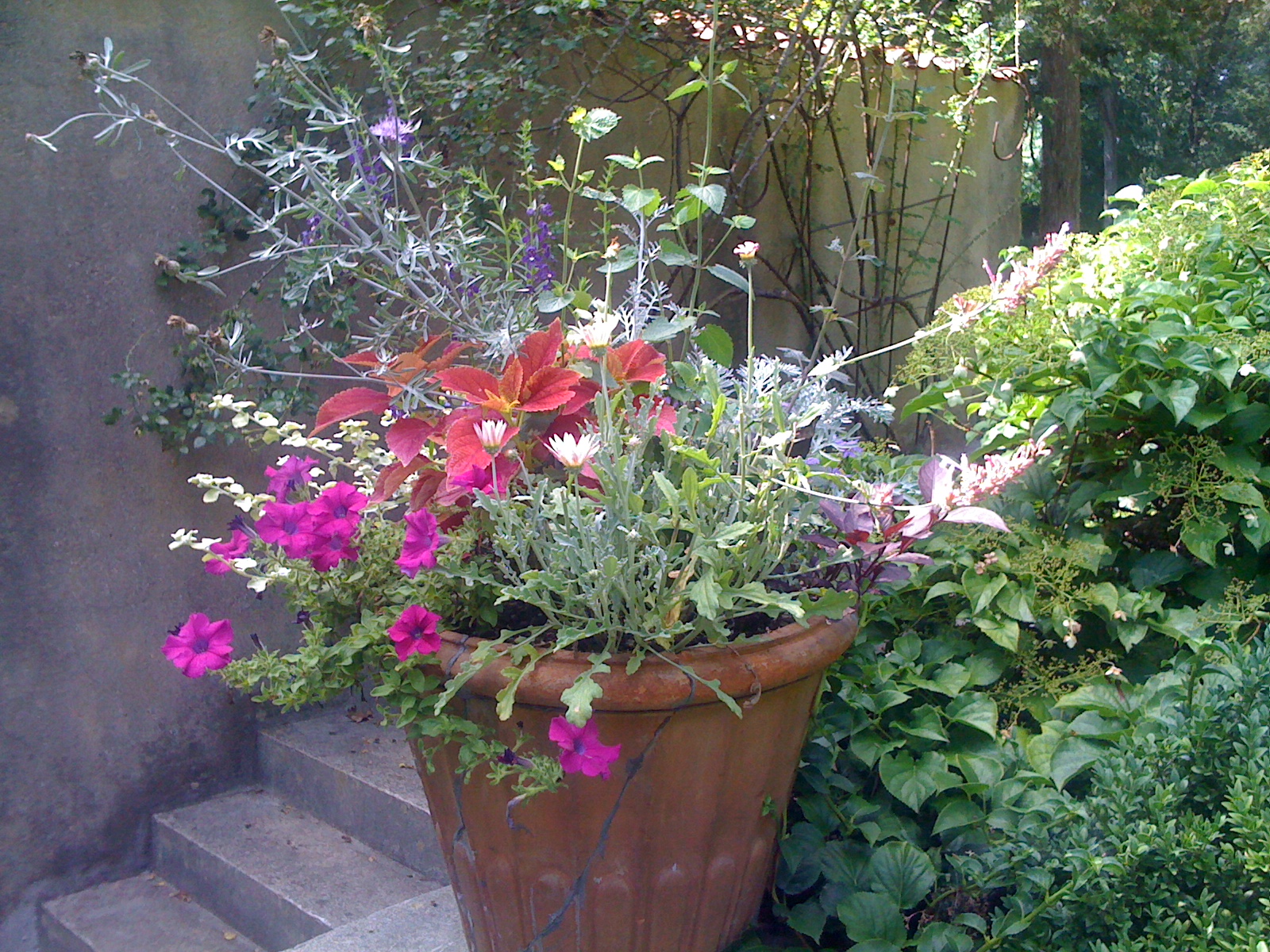
The secret of Caramoor’s charm is too multilayered even to attempt an analysis here. But it occurred to me yesterday that the musical personnel were of a quite unusual character. Everyone on that stage was doing something that they do very, very well. But they are all people who do many other things in our musical life and are thus well-rounded in a way that not all concert artists can be. Barrett, Arron, and Noda are well known as administrators and curators of musical series and events at the pinnacle of our musical life without in any way diminishing their primary means of communication: the music itself. Sasha Cooke, despite being such a dazzling recitalist, has already proved herself internationally as a dramatic star of the opera stage. Stewart Rose pops up everywhere from the Philharmonic or Met orchestras to a Paul Simon recording or the David Letterman show. That one of these is the Chief Executive and General Director of Caramoor itself is doubtless one of the reasons that the musical experience there is so rich.
“Ex umbris et imaginibus in veritatem”
July 9, 2010

The Dream of Gerontius by Sir Edward Elgar is an acquired taste — a taste that it took me a long time to acquire despite the fact that I first heard it in the Royal Albert Hall with Sir Adrian Boult conducting. Even those favorable circumstances left me cold. Some attribute comparative lifelessness to recordings, but it is to them — and possibly a kind of musical maturity — that I am indebted for my love of that work.
The oratorio sets the text of what was once a hugely popular poem by John Henry Cardinal Newman, one of the most eminent of the Eminent Victorians. A new play, starring Derek Jacobi, is available for the next six days on the Web site of BBC Radio 4. It is not to be missed. Called Gerontius, it plays somewhat on the death-scene in the poem to explore a crisis in the life, and post-life, of Cardinal Newman and his companion Father Ambrose St. John. The play and its broadcast are occasioned by the expected canonization of the former and the highly controversial disregard for “my last, my imperative will” that he be allowed to lie in the same grave with Father St. John. After more than a century of doing so, his body has been exhumed and moved to what, for whatever reason or reasons, is considered by authority to be a more appropriate place. The production uses music from Elgar’s oratorio in a very telling manner.
A Happy 109th Year to Hugues Cuenod!
July 8, 2010
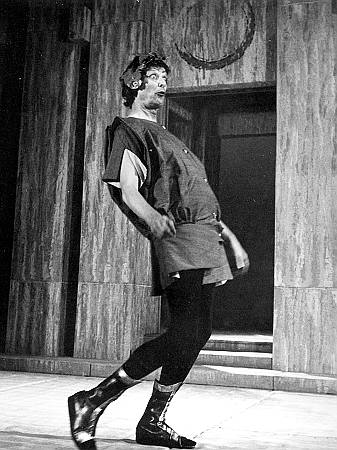
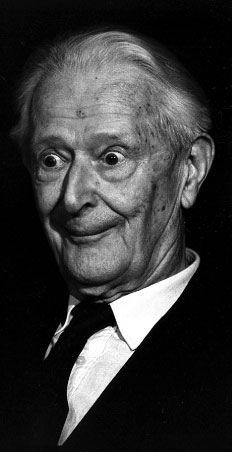
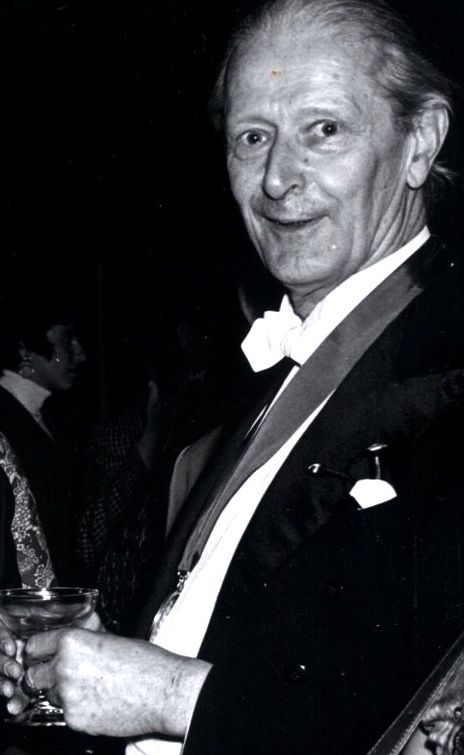

A fine celebration of his birthday, with lots of biographical information, here.
I have never met the paragon (though I was present for his Met debut), but we have had so many friends in common — all of whom adore him — that I almost feel that I have. What a model he is in so many ways!
 RogerEvansOnline.com