The High Note
September 15, 2010
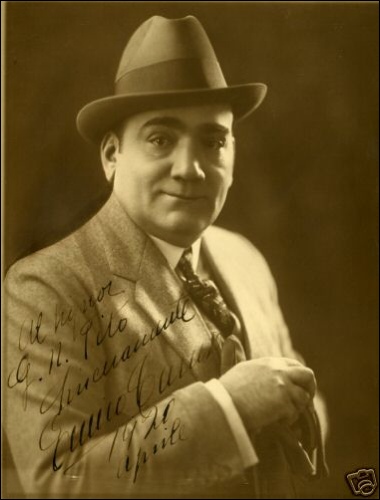
An entertaining BBC Webcast of a 15-minute Agatha Christie mystery that hangs on a tenor’s high note, read by the incomparable Martin Jarvis.
The Cure Can Be Worse Than the Disease
September 6, 2010

Got a tune in your head that you just can’t get rid of? The Web once more comes to the rescue.
It’s Hard to Believe It Happened Less Than Half a Century Ago
September 2, 2010
A Major Aspect of Working at Home
September 2, 2010

Not Letting the Reviews Get You Down
August 30, 2010

I just read one of the best responses to a hostile review that I’ve ever seen. A critic with a longtime vendetta against Montserrat Caballé wrote of her Covent Garden performance in Rossini’s Il viaggio a Reims in July 1992, calling her “cette poissarde des Ramblas de Barcelone” (this vulgar fishwife from Barcelona’s Ramblas).
Since one of the spectacular Barcelona markets is within hailing distance of the Gran Teatre del Liceu on the Rambla of her hometown, she was able to respond with authority: “Our fishwives are wonderful women with extraordinarily rich and powerful voices.”
Artists of Their Time
August 27, 2010

Still working on the Montsalvatge book, I find the juxtaposition of these two quotes stimulating enough to share here:
A banda de no tenir cap pretensió de passar a la posteritat, em satisfà enormement que la meva música agradi als meus contemporanis. Jo diria que sempre he escrit amb sinceritat, tot i que tinc molt present que amb l’excusa de la sinceritat potser s’han escrit les pitjors obres que hom pot imaginar. Resummint diré que, quant a la meva música, prefereixo que interessi més que no pas que agradi simplement.
Having no pretension of mattering to posterity, it pleases me enormously that my contemporaries like my music. I would say that I have always written with sincerity, even though I am very aware that one can write the worst works imaginable while using sincerity for an excuse. In summary I will say that, as far as my music goes, I prefer that it be interesting rather than that it simply please.
– Xavier Montsalvatge, 1992
This age needs … men who are filled with the strength of their cultures and do not transcend the limits of their age, but, working within the times, bring what is peculiar to the moment to glory. We need great artists who are willing to accept restrictions, and who love their environments.
– John Updike, 1951
ATTACCA
August 23, 2010

It is painful to see the New York Times blatantly misusing a musical term — through the agency of its Chief Music Critic, no less. The Italian word segue has been used in music scores since at least operas of the 18th century, in which such instructions as segue l’aria are common. The meaning is simply that the next musical item (in the example, an aria, most commonly after a recitative) follows immediately without anything intervening. The word attacca is a synonym. In a review of the final Mostly Mozart concert, however, we see the word used to mean exactly the opposite — music specially composed to join two elements:
Mozart even wrote some orchestral transitions as segues from arias to choruses.
It is not meaningless pedantry to protest such terminological malpractice in such a place.
For an example of correct employment of the term — a term whose meaning is too valuable to confuse with its direct opposite, for heaven’s sake — see this blog post.
Beethoven? What a Dog!
August 18, 2010
From Beloit College comes this list to remind those of us who write for a general audience: our cultural references may be lost on younger readers.
 RogerEvansOnline.com