Each of Us is Ignorant About Something
May 13, 2025
Frau Friedländer speaks here of the ignorance of the Holocaust that she found among young Germans. A German friend of mine, only a decade or so younger than I am, was spending some months working for the German classical-record company that I also was consulting for. We went, sometime in the ’90s, to a magnificent performance in Carnegie Hall of the Britten War Requiem, conducted by Robert Shaw. We met there a Jewish friend of mine and her party, and we decided all to go together to a then-fashionable joint for dinner. I had always avoided any reference to the WWII with my friend after my embarrassment when we saw Schindler’s List together. But the War Requiem was an inevitable recollection of the war between his country and mine.
All was very gemütlich at our table, and I went to the restroom while we waited for our orders to be served. To my horror, as I returned to the table, I heard my Jewish friend say to my German friend, “And what do you think of the Holocaust, Stefan?”
When he stunned the others by saying, “It has nothing to do with me,” I sat down in the midst of some shocked people and said, “The thing is, Stefan, that in this country we are educated to consider it a tragedy that implicates us all” — leaving unsaid that Germans might feel that even more than Americans.
RIPLEY
April 16, 2024

I’ve seen and heard a good deal of discussion of the hit Netflix limited series called Ripley, after the novel, The Talented Mr. Ripley, by Patricia Highsmith. And no wonder, since it is a masterpiece. The black-and-white cinematography is about as stunning as cinematography can be. There were many scenes that I would gladly hang a print of, so that they could be enjoyed at leisure. And a starry cast produced the work that starry casts are well-paid to produce. And yet, it is a scandalous imposture. It so entirely misrepresents the most important features, not only of that novel but of all the work of Patricia Highsmith, for their unity of aim and devices is pervasive in her œuvre.
For years, people had told me that I would like her novels, but her very name turned me off, unreasonably enough. It had for me a prissy sound in the Barbara Pym territory or, heaven forfend, even in the Cartland direction—which is a pretty funny way to be wrong about a hard-smoking, hard-drinking lesbian from Texas who kept snails as pets. But, 37 years ago, at what was the greatest crisis of my life up to that point, I wandered into a bookstore on Lexington Avenue that specialized in detective stories and crime stories and unclassifiable novels that the readers of the first two genres might fall for. Highsmith fits into the unclassifiable class, and I belong to the kind of reader that the store was aimed at.
My personal crisis was confronting what seemed a first (but far from last) professional failure, the theme of talent, and its being well-spent or squandered. That made the title of The Talented Mr. Ripley fairly leap off the shelf at me. I have a vivid recollection of the moment, even to the point of knowing that I was facing south when I took it down from the shelf. When I got home, I quickly found it almost impossible to put it down, and I was not happy about that inability. I became convinced that this book was completely perverting my moral sense. I was admitting to myself that I was firmly on the side of a protagonist who was remorselessly murdering entirely innocent people who obstructed his path. I told myself that I would finish this evil book and try to recover my own former character—one that had never knocked off anybody, even under the temptation along those lines that had recently come my way. The relief I felt on its completion was badly short-circuited when I learned that the book was only the first of a series of books about this murderous young man. But I was hooked and have read all of Patricia Highsmith’s novels multiple times.
Highsmith’s skillful hypnotic hoodwinking of the non-homicidal reader into becoming a kind of accomplice of a fictional character who convincingly develops gradually towards criminality from an ordinary non-lethal starting point is missing from the new Netflix series. And this is at the very foundation of why it betrays the work of a great, great author. Her popularity is being taken advantage of by interests that she would damn with her roughest swear-words. We know this because of her reaction to the first film made from her books. The very fine Hitchcock feature Strangers on a Train takes up her ingenious idea for a murder and completely subverts her whole point, which is that two men of widely different characters can be led to do the same horrible crime. Hitchcock, like every film-maker after him, didn’t have the stomach for this, the main literary mission of Highsmith’s whole career. Hitchcock let the “nice” man avoid committing the murder in the end, which overthrows the whole original point. And all the movies based on Ripley take one or another cowardly way out of making a story that is recognizably Highsmithian. The is usually done mostly by changing the ending into a more easily palatable one. But the series I’m talking about here goes far, far beyond that to undercut what the novel is about quite ruthlessly.
I have been a fan of Andrew Scott ever since I saw him as Moriarty in the Sherlock series. He’s a fine—at this point distinguished—artist, and it’s not his fault that he is twenty years older than Highsmith’s carefully drawn main character, whose youth and naiveté are absolutely essential to the book. Not for one moment was I able to identify with this middle-aged miscreant, who was, from the outset, made to send signal after signal that he was no good. Examples of narrative vandalism abound, so here are only a few:
Scott’s character writes a savage letter to the elderly aunt who had taken him in after his parents died in his childhood, thus crudely signaling to us his vicious nature. He cruelly denounces her for stinginess toward him and reads her out of his life. In the book, the letter is very grateful and courteous. And even after Tom has achieved his goals of unencumbered wealth, he sends her an affectionate letter of friendly gratitude.
When Highsmith has the wealthy Mrs. Greenleaf send Tom to Brooks Brothers to buy some clothes to take to Dicky, the impecunious Tom is let loose with her charge account to use freely. When he sees a linen shirt that he covets, he conscientiously makes a point of not buying it for himself even though he knows he could do it without detection. In Netflixland, that restraint would be unthinkable. That shopping trip’s purchase of a maroon dressing-gown also provides the new creators with one of the most shocking opportunities for cruelty towards Tom by Dicky. Not only is there no such cruelty between them, but the dressing gown that, on Netflix, is carefully chosen by Tom, then reviled as tasteless by Dicky and later by Freddy is, in the book, touchingly valued by Dicky, who finds it just perfectly suited to his taste. This vandalism of the characters that the author has finely drawn, and which the whole tenor of the story relies, strikes me as unforgivable.
In fact, in the book, the slowly and naturally growing affection between the two twenty-somethings is utterly unclouded, with each being kind and considerate—until a disastrous turning-point that comes when Dicky discovers Tom wearing a complete head-to-toe ensemble of his own clothes. This reveals to all concerned, which very much includes the reader, that this is a story that cannot end well. I have to say that part of me feels that this scene represents a rare misstep by Highsmith. Tom, I feel, is too intelligent to take this chance when it’s a given that Dicky may return home at any moment. But the very devastating almost-unreality of the insane act is probably the point—also that it comes immediately after Tom has been made miserable when he misunderstood a scene in which Dicky was affectionate with Marge. At that moment, in my first enchanted reading of the book, it was as though the scales fell from my eyes about what journey I was accompanying Tom on, just as Dicky is disillusioned in a way that leads to his murder. The vulgar non-acceptance of this plotting masterstroke in the Anthony Minghella film, in which Jude Law has to die because he makes a sexual overture to Matt Damon is disgusting, as is the ending, in which we see justice about to be done against the murderer Tom, as was also the case in the French version, Plein Soleil. That Highsmith’s characters get away with murder is of their very essence.
Much was made in the series of Andrew Scott’s later disguise (needless in the novel, since Tom and Dicky resemble each other so completely that one can be mistaken for the other), including a carefully chosen wig. Why, though, with no motive of disguise, does the actor, at some point earlier on, start wearing what could be Fred Astaire’s unsightly, slicked-back toupée over his own perfectly acceptable hair? It seems to me as inexplicable as the novel’s character of Freddy, a big, awkward American gay-hater being transformed into a persnickety British aesthete, played by a delicate young actor who identifies as inter-sexual and whose body after the murder, incidentally, is treated to some of the most graphic manhandling of the sort that I have ever seen. (Perhaps the fact that the actor is a son of so powerful a father as Sting and of a mother who’s in the movie business may possibly have provided motivation for this highly mysterious casting decision?) The whole business of getting rid of the body goes on far too long and brings what plot has been left intact to a screeching halt. But the makers of this film often show a puzzling lack of the economy that is a Highsmith trademark—first in the initial meeting of Tom with the elder Mr. Greenleaf. That’s dealt with quickly, directly, and tellingly by Highsmith, whereas the series invents a private detective to stretch out early scenes in which Tom the 45-year-old usually handsome actor who, to my eyes, never looks anything but unhealthy in this production. This supposed 23-year-old already is all but shown to us with horns on his head as he bilks innocent people out of money that they think is paying their income tax. In the book, he just plays a practical joke with the letter he sends to these people, getting no money from them and never intending to. The gradual seduction to evil of a normally flawed but relatively innocent, quiet ordinary young man is completely lost as Highsmith’s artistry is thrown overboard.
We will have the consolation of not following young Tom into the other novels as continuation of this series, since at the end of the last episode, we are shown how he’s going down for the murders. The policeman sees a photo of Dicky that of course looks nothing at all like Tom in this production, so there is another motive for trashing the novel’s ending. But they’ve already invested hours of the utterly impossible passing off of Tom as Dicky, to whom he bears no resemblance. Ms. Highsmith, on the other hand, has him going off scott-free to a glorious Greek holiday as the heir of Dicky’s wealth, thanks to a will that Tom forged, where he will gather strength for his fascinating long career in France, as the happily and profitably married art collector and harpsichord player who doesn’t kill anybody unless they force him to do so.
In The Talented Mr. Ripley, as written, the 23-year-old characters played by these actors on Netflix are almost identical in appearance except for hair-color, so that by lightening his hair slightly, Tom can make people who know Dicky believe that he is the man whom he has murdered. This is hardly the case for these fine actors.


A day later: I have been investigating other adaptations of these novels besides the feature films and the series mentioned. There are a number of things available free on YouTube. Among them is a fine, straightforward reading of The Talented Mr. Ripley that I can recommend.
On the other hand, there is a series of dramatic adaptations of all the Ripley books, unfortunately of sorry quality. The scripts are masterpieces of skillful reductions of the plots, but the BBC in a lapse that is hard to believe has both the young American Ripley and and the forty-something sophisticate Ripley portrayed by Ian Hart, an actor from Liverpool who speaks with the most absurd parody of a lower-class American accent, while the character talks about the finer points of painting, of Mozart operas, and his serious immersion in Bach at his new harpsichord. The mansion of M. and Mme. Ripley is in the outskirts of Fontainebleau, so that name is mentioned very frequently, always mispronounced as Fontainbleu as are many other words that it is inconceivable that Highsmith’s Ripley would get wrong. The BBC should hang its corporate head.
I have also listened to two enlightening interviews with the author, both of them administered by British journalists, who are very different but very well-informed and pertinent. Highsmith herself, at two quite different ages, I find magnetic:
Patricia Highsmith | American Author | Good Afternoon | 1978
Patricia Highsmith, In Conversation- Mr Ripley-Ripley underwater-The British Library
An Anniversary
January 20, 2024
It was sixteen years ago today that I began this blog. The changes in it have reflected changes in the technology and media that gave it birth. When I inaugurated it, blogs were a relatively new thing and were of far more importance than they are today. Before such social media as Facebook or Twitter, blogs were the main way of putting self-created discussion out into the world. It now seems remarkable to me that I used to blog almost daily, sometimes with quite substantial articles. With the growth of social media and the ability easily to plug into a vast panorama of interlocutors, rather than mere readers, the maintenance of a blog became far less important. I have never done anything to try to gain “followers” on Twitter, for example. Checking now, I see that I have 8,517 followers there, and I follow 972 people, as well. The Facebook “community” is different in that we receive requests from people to be their “friend.” I respond to a minority of such solicitations, since most of them come from people whom I don’t know at all. But I have 599 “friends” on Facebook, and the exchanges are typically lively and frequently carry significant information.
So I do keep this blog online but only occasionally feel that, for one reason another, I want it to be repository for something that is on my mind. Today, exactly sixteen years older than I was when I wrote that first blog post while visiting a friend at his Sarasota beach house, I look back with all kinds of feelings about what we have all seen, enjoyed, and suffered during those years.
Those Dominos Have Legs
December 19, 2023

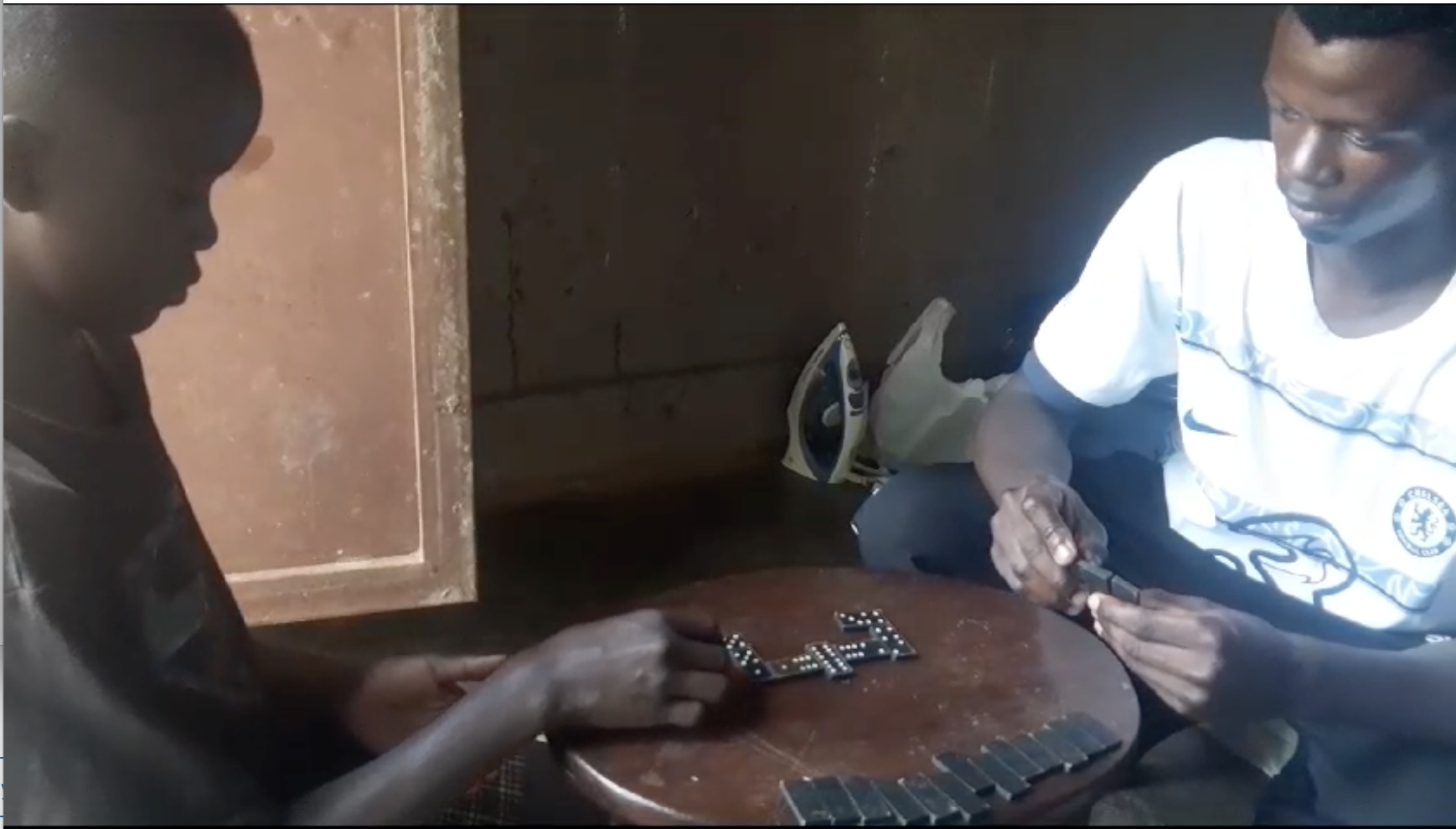
As a blog post from Uganda mentions below, when I was there last spring, I introduced the game of Dominos to a boarding school run by the Benedictines, and we had a tournament. The first prize was a soccer ball, which was won by the sole girl among the competitors. Other prizes were sets of Domino bones used in the contest. Today I received this message from the monk of Montserrat, Father Sergi d’Assís, who works there:
“Un dels premiats del teu campionat de dòmino!!! El va portar a casa seva, en va ensenyar als seus germans i gaudeixen jugant-hi!!”
(One of the winners of your Dominos championship!!! He carried it home and taught his siblings, and they enjoy playing!!)
So don’t tell me I’m not an effective missionary!
An Unforgettable Adventure in Uganda
May 6, 2023
The Novelty Advantage
October 2, 2022

That last week’s opening night of the Metropolitan Opera presented Medea (an Italian revision of Cherubini’s Médée) reminds me of a wonderful story that Hugo Weisgall told. Leonard Bernstein had a brilliant success at La Scala conducting the work with Maria Callas in the title role. As a result, the theater gave him a generous contract that was cancelled after he conducted Puccini’s La Boheme. He was lamenting this fact to some colleagues, saying that he couldn’t understand the change of attitude by the opera company and the public. To which Virgil Thomson suggested: “Lenny, they KNOW La Boheme.”
It Was Good
May 14, 2022
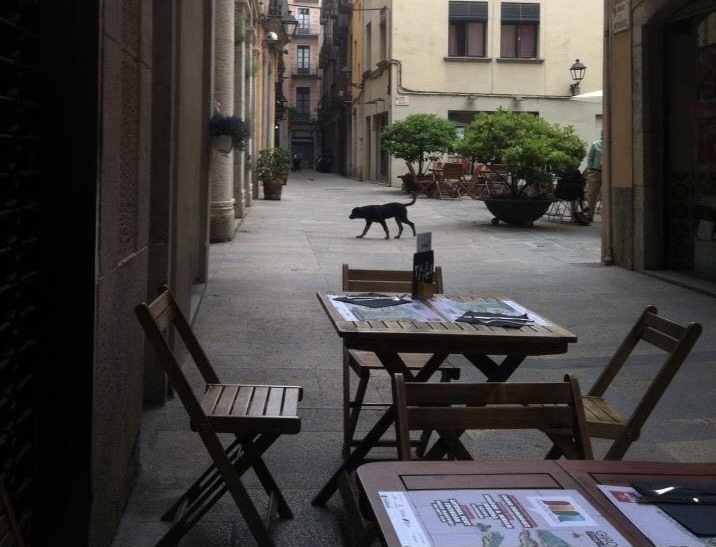
Nine years ago today, I was on my last visit to Catalonia before I moved here permanently. I took this photo from my lunch table in old Girona. It remains a favorite moment.
Nature’s Restorative Beauty
May 18, 2021




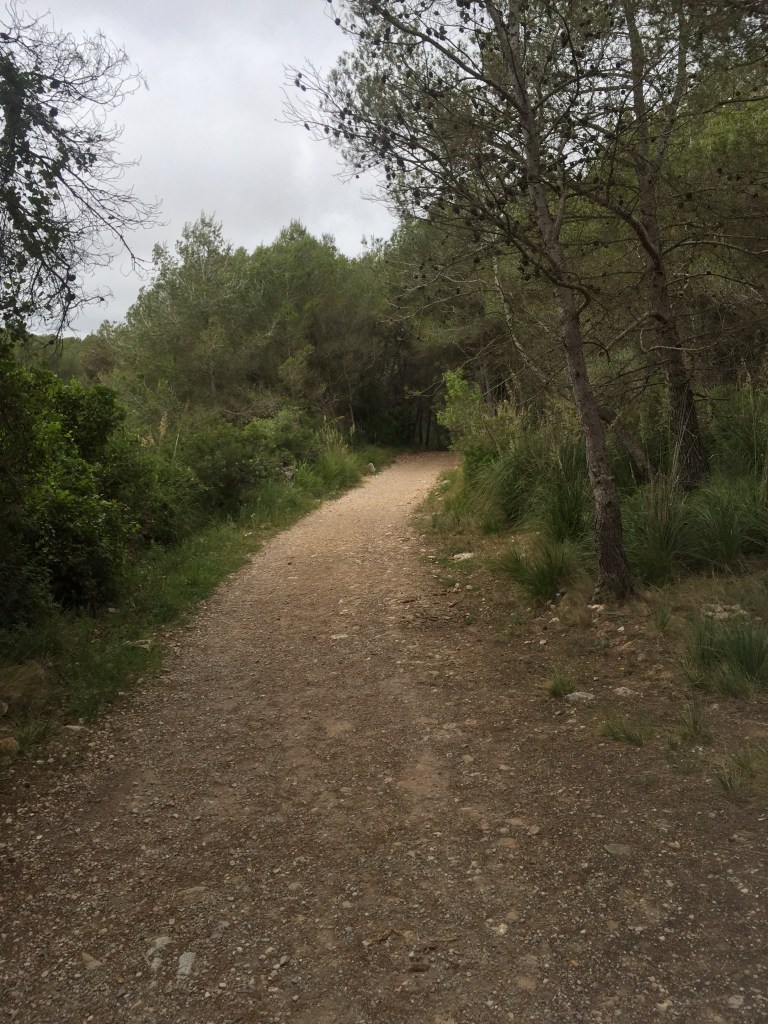
In the past, I have seen wild boars exiting the park and crossing the road with nonchalance, and the terrain also includes rabbits, Mediterranean tortoises, quails, Bonelli’s eagles, falcons, and other birds of prey. But those were all evidently feeling shy where I was today.













The way home
 RogerEvansOnline.com